
A trailing stop is a dynamic risk tool that moves with a winning price to protect gains while a trend develops. Traders use this type of stop order to let winners run and to reduce emotional exits that can harm performance.
This approach converts to an executable order when the trigger hits, so final fills can differ from the indicated level during volatile sessions. In the U.S., many brokers only activate these tools during regular market hours (9:30 a.m.–4:00 p.m. ET), which matters for overnight gaps and execution.
Set the trail distance to match stock volatility and typical pullbacks. In trending markets, this method supports a disciplined trading strategy; in choppy conditions it can cause premature exits. This guide will define mechanics, show when to apply each order type, and explain how to pick trail distance and manage execution in live trading.
Key Takeaways
- Use a trailing stop to lock profits while a trend continues.
- Know that the trigger usually becomes a market order, so fills may vary.
- Most U.S. platforms trigger during regular market hours only.
- Calibrate the trail to stock volatility to avoid needless exits.
- Apply these tools as part of broader risk management and position sizing.
What Are Trailing Stop Orders and Why They Matter for Risk Management
Using a price-linked exit lets winners run while automatically guarding against sharp reversals. This form of exit tracks a security by a set percentage or dollar amount and adjusts as the price moves in your favor.
How they “follow” price to protect gains
As a position rises, the protective level ratchets up. The trigger price updates to new highs but never moves lower when the market pulls back.
This one-way behavior preserves gains while leaving room for further upside in trending markets.
Key differences from a standard stop order
A fixed stop price stays static until you change it. In contrast, a moving mechanism recalculates the stop price as new reference points form.
Execution mechanics vary by broker: some platforms use the inside bid/ask to fire, while others trigger on the last trade. That can affect when the order becomes a market order in thin liquidity.
“Use this tool to enforce exits that match the current market and reduce emotional decision-making.”
Next, we’ll show how the trigger price is calculated and compare percent versus amount-based trails in practice.
How Trailing Stops Work: From Stop Price to Market Execution
How a broker detects a trigger defines when a protective exit becomes active.
Trigger mechanics vary by platform. Some brokers fire a sell trail on the inside bid and a buy trail on the inside ask. Others use the last trade print. This difference changes sensitivity in thin or fast markets.
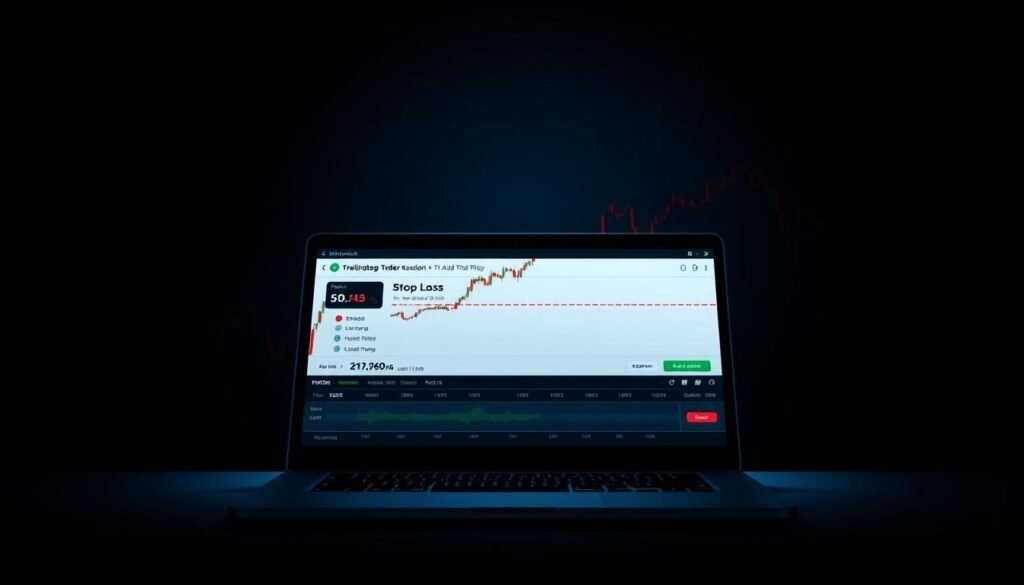
Percentage vs dollar trails
With a percentage trail, the gap grows as a stock rises and narrows on declines. A dollar-based trail keeps a fixed point offset.
Example: a stock climbs from $100 to $120 with a 10% trail. The trigger price moves from $90 to $108 as new highs form.
Session timing and duration
Most U.S. platforms only trigger during regular market hours (9:30 a.m.–4:00 p.m. ET). Day duration expires at the close. GTC persists to future sessions per broker rules.
Conversion and execution realities
When the trigger fires, the trailing stop order usually becomes a market order aimed at immediate execution. That prioritizes speed over price control and can lead to slippage.
| Feature | Percentage Trail | Dollar (Point) Trail |
|---|---|---|
| Distance behavior | Wider as price rises; tighter as price falls | Fixed point gap regardless of price |
| Example | 10% on $100 → trigger at $90; on $120 → $108 | $10 on $100 → trigger at $90; on $120 → $110 |
| Best for | Percent-based risk scaling with volatility | Simple point protection for low-priced stocks |
When to Use Trailing Stops in Your Trading Strategy
Apply a dynamic protective level when price trends show clear higher highs or lower lows.
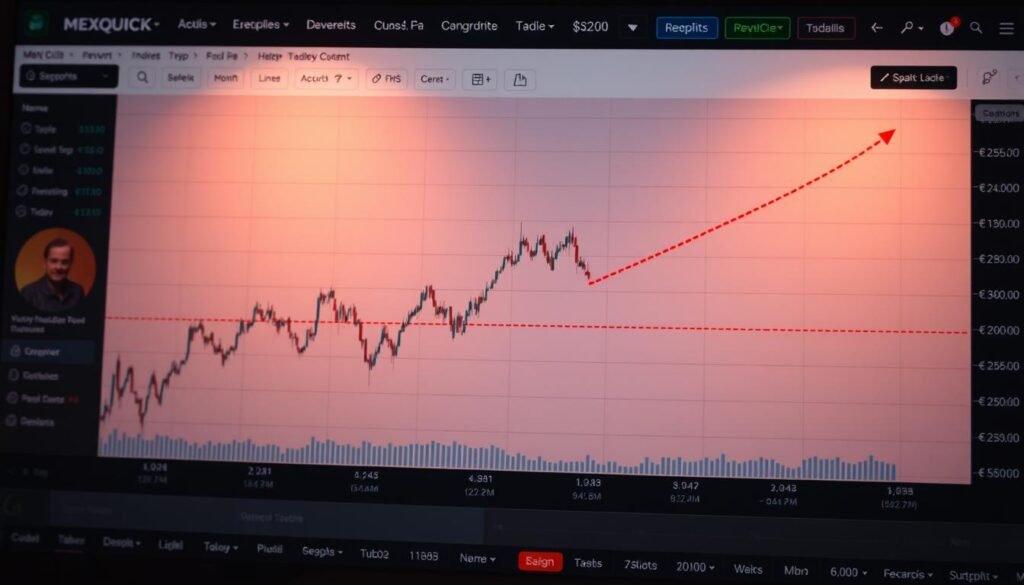
Ideal environments: Use a trailing stop in persistent uptrends or downtrends where momentum favors carrying a position and letting profits run. Trend-following strategies benefit most from this approach.
Range and noise: In a tight range, normal oscillations often hit a trail and reduce expectancy. If markets lack directional bias, prefer wider buffers or alternate exit logic such as fixed targets or time-based exits.
Practical checks before placing a trail
- Adjust trail distance for volatility—wider during noisy sessions.
- Match the trail to your holding period and position size.
- Use a trailing stop sell below price for longs; use a trailing stop buy above price for shorts.
- Before earnings or macro events, reassess the trail to avoid gap-driven fills.
| Scenario | Best approach | Why |
|---|---|---|
| Strong trend | Use a moving exit with moderate distance | Captures extended gains while protecting profit |
| Sideways range | Widen trail or use fixed targets | Reduces false exits from normal swings |
| High-noise volatility | Increase buffer or pause the trail | Prevents frequent triggers and churn |
Choosing Your Trail: Percentage, Points, ATR, and Technical Levels
Match your exit method to market behavior: percentage, point, ATR, or technical bands each suit different setups. Pick a rule that fits your timeframe and the security’s normal pullbacks.

Percentage vs amount
Percentage-based trails scale with price and work well when volatility grows with trend size. Calibrate to historical pullback depth for the stock to avoid being tagged by normal swings.
Fixed amount (point) offsets keep dollar risk steady across levels. Use them when you want consistent monetary exposure, knowing percentage risk will change as price moves.
ATR, moving averages, and technical levels
Use an ATR multiple to set the stop price so the exit reflects current volatility. Combine that with closes under moving averages (8-, 20-, 50-day) for a trend-health check.
Place the trigger price slightly beyond support or resistance to reduce routine tests from triggering an exit. Backtest ranges and refine the rule set for each trade and market.
| Method | When to use | Key note |
|---|---|---|
| Percentage | Trending stocks with steady moves | Scales with price; adjust to average pullback |
| Fixed amount (point) | Consistent dollar risk across levels | Simple but changes relative risk as price moves |
| ATR / Technical | Noisy markets or trend checks | Reflects volatility; align with moving averages or support |
Order Types to Place the Trail: Market vs Trailing Stop Limit
Deciding between execution methods affects whether you prioritize a quick exit or a price cap on fills.
Trailing stop market sends a market order when the trigger fires. This favors fast execution in liquid names but gives up control of the final price. Fills can occur above, at, or below the trigger in volatile sessions.
Trailing stop limit posts a limit order at a preset offset once the trigger hits. That preserves price but risks a missed fill if the market gaps past your limit. Verify whether your broker defines the offset as a dollar amount or a percentage and whether it updates as the price moves.
“Choose market for certainty of exit in fast-moving symbols; choose limit when price control outweighs fill probability.”
For larger size, split the position: use a market slice to secure partial exit and a limit slice to chase better price. Track average slippage for market fills and the frequency of unfilled limits to refine your plan.
| Feature | Market Exit | Limit Exit |
|---|---|---|
| Primary benefit | Fast execution | Price control |
| Risk | Slippage in quick moves | No fill if market gaps |
| Best use | Liquid names, urgent exit | Low slippage tolerance, accept fill risk |
Placing and Managing a Trailing Stop Order
Decide your protective level and duration before entering a position so the exit is a plan, not a reaction.
Set the initial stop price relative to your entry and risk budget. Choose a trailing offset as a percentage or fixed amount that matches typical pullbacks for the symbol.
Pick duration: select Day if you want protection only during today’s session or GTC to persist across sessions. Remember most U.S. brokers trigger during regular market hours.
Manage the trail without choking the trade
Confirm which market signal flips the order into execution mode—inside bid/ask or last trade—so you know how sensitive the trigger will be.
Size positions to match the trail distance. Too tight a buffer can force quick exits; too wide may erode gains.
- Monitor execution and expect slippage from trigger to fill; use liquid names or smaller size to lower that risk.
- Adjust the offset as volatility changes, keeping the one-way ratchet that preserves gains.
- Combine partial profit-taking with a remaining protective order to balance realized gains and upside participation.
Document your rules and reassess before earnings or macro events. Track performance and refine how you place trailing stop parameters over time for better execution and risk control.
Execution Realities and Risks to Watch
Execution can diverge from intent when price gaps or liquidity dries up between sessions. Plan for scenarios where the trigger price you set may not match the eventual market price.
Gaps, fast markets, liquidity, and slippage
Gap risk: Overnight news or earnings can open a stock well above or below your level. A triggered market order may fill far from expectations.
Fast-market dynamics: High volume can push queues rapidly, and the fill can move across several price levels in seconds.
Thin books create partial fills across multiple price points. Larger size increases the chance of slippage and messy executions.
Corporate actions, halts, and data anomalies that can trigger exits
Splits, ticker changes, or corporate adjustments can cancel or convert active instructions. Check broker alerts before major events.
If a security is halted, triggers won’t fire until trading resumes — and the reopen can gap the price dramatically.
Errant prints or stale quotes from feeds sometimes trip triggers on platforms that use the last trade rather than the inside bid/ask.
Why these exits aren’t guaranteed to limit losses
Expectation management: When a trigger becomes a market order, execution priority beats price certainty. That protects against time risk but not against unfavorable fills.
“A triggered market order secures an exit; it does not guarantee a specific price.”
For tighter price control use limit orders, but accept the trade-off: you may get no fill in fast moves. Combine partial market fills with limit slices to balance execution and price.
| Risk | What can happen | How to mitigate |
|---|---|---|
| Overnight gap | Fill far from trigger price | Reduce size overnight or use limit variants |
| Fast market | Execution across many levels | Prefer market in liquid names or smaller lots |
| Low liquidity | Partial fills and high slippage | Slice orders; monitor depth before entry |
| Corporate action / halt | Order canceled, delayed, or misapplied | Move orders before events; follow broker notices |
Actionable checklist: review duration settings (day vs GTC), confirm which market signal triggers the order, and monitor active instructions around catalysts. Expect execution, not price guarantees, and adjust amount or percentage rules to match your tolerance for losses and slippage.
Conclusion
Implementing a dynamic protective level keeps upside potential while guarding capital. ,
Use a trailing stop to systematically lock a portion of gains and avoid emotion-driven exits. Match a percentage or point offset to the security’s volatility and validate it against historical pullbacks.
Choose order types deliberately: prefer a market exit for execution certainty or a limit order when price control matters. Verify your broker’s trigger basis (inside bid/ask vs last trade) and whether orders persist as day or GTC instructions.
Expect fills to vary from the trigger price. Plan position size and slippage assumptions, document rules, and backtest your offsets. Treat these tools as part of a broader risk management strategy rather than a guarantee against losses.
Define your offsets, test your process, and implement the plan in your trading playbook today.
FAQ
What is a trailing stop and how does it help manage risk?
A trailing stop is a dynamic exit that moves in the direction of a favorable price to lock in gains while allowing room for a position to run. It reduces downside risk by converting to a market order if the market reverses by a preset amount, helping traders protect profits without constant monitoring.
How does a trailing stop “follow” the market price?
The mechanism sets a trigger offset—either a percentage or fixed dollar amount—behind the highest favorable price reached. As the market moves up, the trigger advances by that offset. If the price reverses by the offset, the trigger fires and the broker executes a market order at the next available price.
How does a trailing tool differ from a standard stop order?
A standard stop is static: the trigger is a fixed price that doesn’t change. The trailing alternative adjusts with the market, protecting gains as prices rise. The static stop limits losses from the start, while the adjustable version aims to capture more upside before exiting.
What determines when the trigger becomes a market order?
Execution depends on the broker’s rules and the chosen trigger method (last trade, inside bid/ask, or bid for sell triggers). Once the trigger condition is met, most brokers submit a market order that fills at available liquidity, which can result in slippage in fast or thin markets.
Should I use a percentage or a dollar amount for the offset?
Use percentage offsets for stocks with wide price ranges and dollar amounts for lower-priced names. Base the size on typical pullbacks: more volatile securities need larger offsets. Consider average true range (ATR) to align the offset with recent volatility.
How do session rules affect trailing orders (day vs GTC)?
Day orders expire at market close; a GTC order remains active until filled or canceled, subject to broker limits (often around 60–90 days). Outside regular hours, some brokers won’t evaluate triggers or may use different quote sources, so behavior can vary for premarket and after-hours trading.
What are the trade-offs between market and trailing stop limit executions?
A market-based execution fills faster but can suffer slippage. A stop-limit version sets a limit price to control execution price but risks no fill if the market gaps beyond the limit. Choose based on whether fill certainty or price control matters more for the position.
How should I set an initial stop price and trailing offset when placing the order?
Start with an entry-based initial stop that reflects acceptable loss and combine it with an offset tied to volatility or support levels. Define order duration (day or GTC) and confirm the broker’s trigger method. Keep the offset wide enough to avoid being cleared by normal noise.
Can I adjust the trail once the order is placed?
Yes. Brokers typically allow manual adjustments to the stop level or offset. When increasing protection, avoid tightening so much that normal fluctuations trigger an exit. Document changes and keep adjustments consistent with your strategy.
What execution risks should I watch for when using a trail?
Key risks include gaps at open, low liquidity, rapid intraday moves, and slippage. Corporate events, halts, or data errors can trigger unintended fills. Because a triggered market order has no guaranteed price, a trail cannot promise a capped loss in extreme conditions.
How do corporate actions and trading halts affect a trailing arrangement?
Dividends, splits, mergers, and halts can alter quotes and trigger orders unexpectedly. Brokers may cancel or adjust open orders during certain corporate events, so review broker policies and consider manually managing positions around known events.
Is a trailing mechanism suitable for rangebound markets?
In choppy or rangebound conditions, a tight follower will likely be hit frequently, causing whipsaws. Wider offsets or alternative exits—such as time-based stops or technical levels—can reduce false exits and improve performance in noisy markets.
How can I size the offset using ATR or technical support levels?
Multiply the ATR (14-period is common) by a factor (1.5–3) to set a volatility-based offset that accommodates normal swings. Alternatively, place the trigger a few ticks or cents beyond a confirmed support or moving average to avoid being stopped by routine retracements.
Will a trail guarantee I won’t lose more than a set amount?
No. While the tool helps manage risk, it does not guarantee a specific exit price. Market orders execute at prevailing prices, which can gap past the trigger during fast or illiquid conditions. Treat the mechanism as risk reduction, not an absolute cap.
What operational checks should I perform before relying on an automated follower?
Verify how your broker determines triggers (bid/ask vs last), confirm order duration options, test with small positions, and review historical fills. Also ensure your platform handles after-hours rules consistently and be aware of fees that can affect execution.