
Start smart: this beginner’s guide explains how to predict market direction and act on price moves across multiple markets. You will learn clear, step-by-step actions to open an account, place a trade, and use risk controls so capital preservation stays central.
Understand the basics: how market price forms, the difference between exchanges and OTC venues, and why leverage and margin change potential profits and losses. Modern platforms give charting, analytics, demo accounts, and tools to practice with virtual funds before risking real capital.
This guide covers instruments from shares and ETFs to forex pairs and commodities, plus order types and simple strategies. It focuses on process, reliable resources, and disciplined decision frameworks to help new traders build skills responsibly.
For a practical demo environment and platform features, see MEXQuick demo and resources.
Key Takeaways
- Learn how market price forms and how to place a trade with risk controls.
- Use demo accounts and educational resources to build confidence.
- Understand leverage, margin, and how profits or losses depend on market moves.
- Modern platforms provide charts, analytics, and mobile tools for active management.
- Focus on consistent decision-making and capital preservation over guaranteed profits.
What is trading? Understanding market price, profit, and loss
You can take a view on whether a price will rise or drop, often using derivatives that reflect the underlying market.
Definition: Speculating on price movement without owning the asset
In plain terms, trading means you speculate on direction rather than hold the actual asset. Many participants use contracts that mirror a share, index, commodity, or currency so they can gain exposure without physical ownership.
Profit and loss basics: When the market moves with or against your position
If you buy and the price rises, the difference between entry and exit creates profits. If the market falls instead, you face a loss.
Going short works the opposite way: you profit when value falls and lose when it rises. Clear entry and exit plans matter for real money outcomes.
“A derivative tied to a $100 share that moves to $105 will reflect the same $5 change in value.”
Supply and demand: The engine behind price movement
Prices change because supply and demand shift. News, earnings, economic data, and sentiment all push markets toward more buying or more selling.
- Derivatives mirror value: they track underlying moves closely.
- Long vs short: long benefits from rising price; short from falling price.
- Record your rationale: note why you enter a trade to learn from outcomes.
| Concept | What it means | Beginner tip |
|---|---|---|
| Market price | Current agreed value to buy or sell | Watch liquidity and spreads |
| Profit/Loss | Difference between entry and exit | Plan stops and targets |
| Supply & Demand | Drivers of movement | Follow news and data |
Trading vs investing: Key differences beginners must know
Active approaches aim to profit from near-term price moves. Many participants use derivatives that do not grant ownership. These positions need frequent monitoring and strict risk limits.
Ownership and sources of returns
Investors typically buy shares outright to capture long-term value, dividends, and possible voting rights. Traders seek to capitalise on short-term moves up or down and do not usually own the underlying company asset.
Time, risk, and account setup
- Time commitment: traders act often; investors check less frequently.
- Risk profile: short-term work faces quicker swings; long-term tolerates interim volatility.
- Accounts: some providers offer derivatives-only accounts; brokerages enable direct ownership.
| Aspect | Short-term | Long-term |
|---|---|---|
| Objective | Profit from price moves | Build value and income |
| Ownership | No ownership with derivatives | Shares, dividends, voting rights |
| Typical strategies | Technical signals, event-driven | Valuation, cash flow focus |
| Account notes | Derivatives or margin accounts | Standard brokerage account |
Takeaway: match your plan to your time horizon, tax rules, and discipline for clearer results.
Financial markets you can trade today in the United States
US-accessible markets span shares, ETFs, indices, forex pairs, commodities, bonds and IPOs. Each area moves for different reasons, so your choice should match your knowledge and risk appetite.
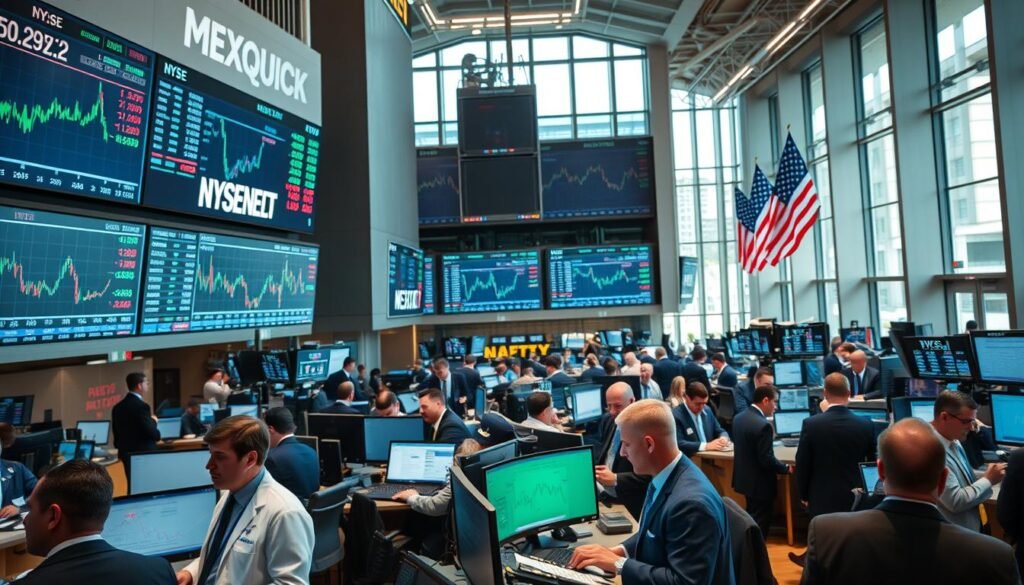
Shares and ETFs
You can trade single stocks or ETFs to target sectors or themes. Many platforms list thousands of instruments; some advertise access to over 13,000 CFD markets across these categories.
Indices
Indices such as the S&P 500 or FTSE 100 let you take a macro view by trading a basket of companies as a single instrument. This gives diversified exposure without picking names.
Forex and commodities
Forex is a decentralized, highly liquid market that runs around the clock. You can trade majors, minors and exotics using currency pairs like EUR/USD.
Commodities split into hard goods (gold, oil) and soft goods (coffee, cattle). Volatility and typical spreads differ by commodity and exchange.
Bonds, rates and IPOs
Bond and interest-rate products let macro-focused traders follow yields and central bank policy. IPOs provide event-driven opportunities but often carry higher price swings.
| Market type | Why trade it | Beginner note |
|---|---|---|
| Shares / ETFs | Single-name or sector exposure | Start with liquid, well-known names |
| Indices | Diversified, macro exposure | Use stops; follow economic news |
| Forex | 24/7 liquidity, currency moves | Watch session overlaps for volatility |
| Commodities | Supply/demand and seasonal drivers | Understand storage and seasonality |
Example: you might trade Apple shares, Brent crude, or EUR/USD depending on your edge. Focus on a few markets first, then expand as skill and confidence grow.
Derivatives 101: How CFDs mirror the value of the underlying market
A CFD reflects the underlying market’s moves, so its price rises and falls in step with the asset it tracks.
Going long vs going short with derivatives
Derivatives are instruments whose price mirrors an underlying asset. With a CFD, profit or loss comes from the change between entry and exit without owning the asset.
Go long when you expect the price to rise; go short when you expect it to fall. Apply the same discipline to entries, stops, and exits for either direction.
Why many retail traders use leverage
Leverage lets you open a position by paying margin instead of the full value. That reduces upfront capital but means your P/L tracks the full position value.
- Leverage amplifies outcomes: gains and losses grow with exposure.
- Use prudent position sizing and protective orders to limit downside.
- Check platform transparency on pricing, spreads, and financing so you understand product works and what fees apply.
Warning: money trading cfds can move fast. Maintain clear risk rules, record your trade rationale, and remember client accounts lose capital when markets run against them and may lose money rapidly if leverage is unchecked.
Product types explained: Spot, futures, and options
Choosing the right product matters because each product affects costs, time horizon, and risk. Pick the simplest product that matches your plan before adding complexity.
Spot (cash) price
Spot means you trade at the current market price. Spreads tend to be tighter, which lowers execution cost for short-term moves.
Holding a spot position overnight can incur financing fees. There is no fixed end date, so you can keep a position open as long as you cover any financing and margin.
Futures and expiry
Futures are standardized contracts that set a price to be settled by a given date. They often have wider spreads but typically avoid overnight financing costs.
These contracts suit medium- to long-term views, macro hedges, or when you want exposure without daily financing. Note some platforms call them forwards in certain markets.
Options: non-linear exposure
Options give asymmetric payoffs. Calls and puts, plus spreads, let you define risk and express views on volatility.
Time matters: option value decays through theta, so gains can erode as expiration nears. Use options for defined-risk approaches or to trade volatility.
| Product | Key feature | Typical use | Impact on size & margin |
|---|---|---|---|
| Spot | Current market price, no expiry | Short-term moves, scalps | Smaller spreads, financing affects cost |
| Futures | Set price by a date | Macro swings, hedging | Standardized contract size, margined |
| Options | Non-linear payoff, theta decay | Defined-risk strategies, volatility plays | Premium paid, margin varies by strategy |
Practical note: the underlying movement drives pricing for all products, though options also price in expected volatility and time. Start with the product that fits your risk appetite and size constraints before expanding.
OTC vs centralized exchange: Where and how trades happen
Where you execute a position—directly with a provider or via an exchange—shapes contract terms, hours, and risk.

Accessibility, custom contracts, and counterparty risk
Over-the-counter (OTC) deals occur directly between two parties, often through a dealer network. These contracts are flexible and can be tailored to specific needs.
Pros: broader accessibility for retail users and 24/7 availability on some instruments like CFDs.
Cons: OTC exposes you to counterparty risk. When leverage is used, that risk increases.
Exchange hours, standardized contracts, and execution
Centralized exchanges use set hours and a public order book. Contracts are standardized, which helps liquidity and price transparency.
“Exchange-traded products give clear specifications and a central clearing process that lowers counterparty concentration.”
- Differentiate venues: OTC offers customization; exchanges give standardized terms.
- Availability: OTC can run beyond normal hours; exchanges follow schedules tied to the instrument.
- Execution mechanics: dealers quote OTC prices; exchange prices come from visible orders.
- Contract structure: tailored OTC contracts vs fixed exchange specs that aid comparability and liquidity.
- Costs and financing: spreads, fees, and overnight financing differ by venue and provider.
| Feature | OTC | Exchange |
|---|---|---|
| Hours | Often 24/7 (provider dependent) | Set trading sessions |
| Contracts | Customised terms | Standardised specifications |
| Risk | Counterparty risk | Central clearing and rules |
Your P/L will still track underlying market movement, whatever the venue. Evaluate provider reputation, platform reliability, and disclosures before you trade and align your choice with product knowledge and required hours.
Accounts, capital, and position sizing for beginners
Begin by choosing an account type that matches your experience and the capital you can afford to risk. Many platforms offer demo accounts with virtual funds (for example, $20,000) so you can practice order placement, charts, and risk tools without real loss.
Setting up a live or demo account
Use a demo first. Practice on web and mobile apps to learn how balances, open positions, and transaction history display. A live account requires funding to open a trade and records real P/L as the difference between entry and exit.
Deal size, contract value, and managing account balance
Deal size links directly to contract value and exposure. Larger sizes raise margin needs and amplify potential gains and losses.
- Risk per position: limit risk to a small percentage of account balance per trade to avoid big drawdowns.
- Platform tools: use stop-loss, take-profit, and alerts to keep risk aligned with account size.
- Capital allocation: spread capital across positions to reduce concentration risk and lower chance of margin calls.
Document your plan. Record entry criteria, exit rules, and position-sizing rules so you trade consistently and protect capital while you learn.
How leverage and margin work — and why money can move rapidly
Using margin means you only post a fraction of the full position, so market moves can have an outsized effect on account equity. This section explains the mechanics, the risks, and simple steps to reduce exposure.
Margin deposits versus full position value
Leverage lets you access full market exposure by depositing only a margin fraction. Profits and losses are calculated on the full position value, not just the margin you posted.
Amplified profits and losses
Even small price moves can translate into meaningful account changes. That acceleration means a single move can magnify gains — or cause you to lose money rapidly when the market goes the other way.
Margin calls and keeping funds available
If your equity drops below maintenance margin, providers can issue margin calls or close positions automatically. Client accounts lose protection if buffers are too thin, so maintain extra funds.
- Set conservative leverage and modest deal size to limit stress on accounts.
- Use stop orders and monitor available margin intraday to avoid forced closures.
- Stress-test scenarios for sharp price moves to see how much you could lose before you enter a trade.
“Leverage increases both upside potential and the speed at which losses can occur.”
Bottom line: leverage is optional — use less until you build skill and capital durability, and plan so client accounts lose money only when you understand the consequences.
How to place your first trade: A step-by-step walkthrough
Placing a first position need not be intimidating. Follow a clear sequence: open or fund an account, pick a market after reviewing price and news, choose direction, size the deal, set risk controls, then place and monitor the order.

Select a market and analyze the data
Log into your account and filter the instrument list to a market you know. Use watchlists, price charts, and fundamentals to form a concise view. Confirm liquidity and how the exchange shows quotes before you proceed.
Choose buy (long) or sell (short) based on your view
If your analysis suggests price will rise, choose buy. If you expect a decline, choose sell. State your entry reason in a trade journal so the choice stays disciplined.
Set deal size, place order, and monitor position over time
Decide deal size using a fixed percentage risk per position and the stop distance. Many platforms list up to 13,000 CFD markets, so pick a familiar instrument and keep margin conservative.
Choose market or limit order, attach a stop-loss and optional take-profit, then confirm instrument, direction, size, and attached orders before execution.
Use stop orders and alerts to help manage risk
Set alerts for key price levels so you are notified without constant screen time. Monitor unrealized P/L and margin impact, adjust stops if the thesis evolves, and record outcomes for review.
| Step | Action | Why it matters |
|---|---|---|
| Open & fund account | Create live or demo account and deposit funds | Enables real orders and reflects true margin needs |
| Market selection | Use charts, news, and watchlists | Improves odds by trading familiar instruments |
| Direction | Buy if price expected to rise; sell if fall | Aligns execution with your market view |
| Size & orders | Set contract size, stop-loss, and take-profit | Controls risk and defines max loss |
| Monitor & review | Use alerts, track P/L, update journal | Builds discipline and refines future choices |
Practical note: scale up only after consistent execution and when you can comfortably afford the positions you take.
Core strategies for beginners: From market selection to timing
Beginner success starts with a simple rule: match a clear strategy to the market and the time you can commit. Pick one method and practise it until results are repeatable.
Trend-following vs mean reversion
Trend-following seeks persistent direction. Look for higher highs and higher lows in an uptrend or lower highs and lower lows in a downtrend. Ride the move with clear exit rules and scale out as the market confirms your view.
Mean reversion targets stretched moves back toward averages. Enter when price is extreme versus a moving average or range and place stops beyond the swing extremes to avoid being clipped.
Use news and events to refine entries
Map economic calendars and earnings dates so you know when volatility may spike. Use objective data—charts, indicators, and event schedules—to time entries instead of relying on instinct.
“A simple checklist beats impulse: entry criteria, confirmation signal, stop, and invalidation level.”
| Focus | What to check | Beginner tip |
|---|---|---|
| Market & time | Liquidity, session hours, volatility | Match to your holding period |
| Signal type | Momentum vs reversion | Stick to one method initially |
| Risk rules | Size, stop, partial profits | Protect capital first |
Practice: use resources and paper accounts to test setups. Review trades afterward to learn what worked and iterate your approach.
Risk and money management: Protecting your trading capital
Protecting your capital starts with clear rules that limit how much you risk on any single position. Set a fixed percentage of account equity as your max risk per trade so losses stay small and survivable.
Position sizing rules and risk per trade
Decide risk as a percent of equity and size deals around that limit. Use stop distance and position size to calculate risk in dollars before you enter.
Stop-loss, take-profit, and trailing stops
Stop-loss orders cap downside, and take-profit orders systematize exits to cut emotion. Trailing stops lock gains while letting winners run.
Volatility, gaps, and weekend risk
Size stops with ATR or recent ranges so normal volatility doesn’t trigger exits. Beware that earnings, macro events, or weekend reopenings can gap price beyond stop levels.
Short-selling risks and unlimited upside moves
Short positions carry the risk of unlimited upside. Keep strict size limits and avoid overconcentration in a single commodity or index during event-heavy periods.
- Run routine risk audits: review largest losses, margin use, and correlations.
- Keep discipline: never widen stops impulsively; plan adjustments in advance.
- Use platform alerts and risk tools to help enforce limits and protect money.
“Leverage can make gains large and losses occur money rapidly due to leverage.”
Platforms, tools, and resources that help retail traders
A reliable platform turns market data, alerts, and account history into practical signals for everyday decisions.
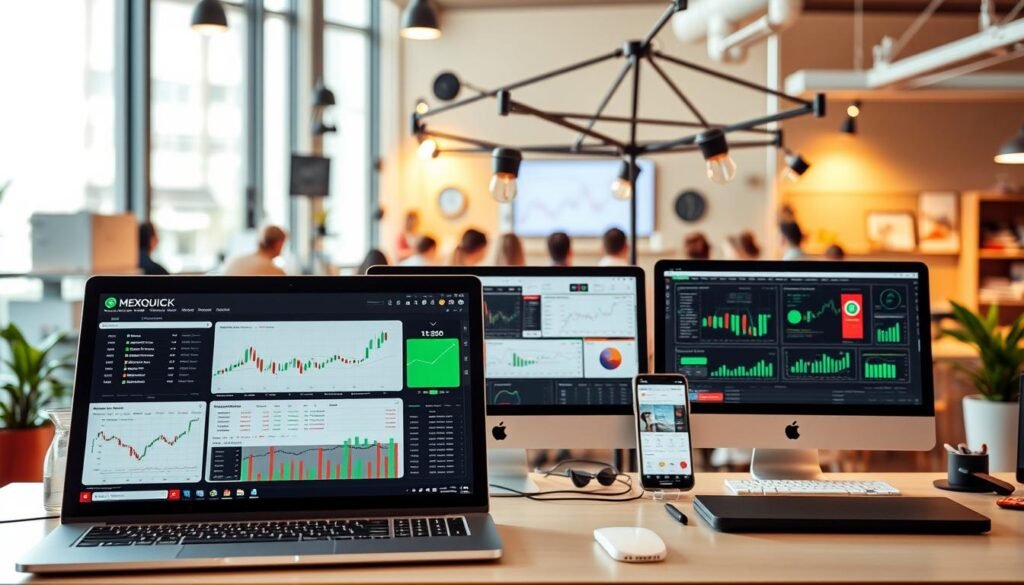
Web and mobile platforms for order execution and account tracking
Modern web and mobile apps streamline order entry, position monitoring, and account history. Award-winning interfaces show balances, open orders, and fills in one view.
Many providers offer demo accounts with $20,000 in virtual funds so you can practice without real risk. Platforms often list over 13,000 CFD markets across shares, currency pairs, indices, and commodities.
Charting, analytics, and trade journaling tools
Robust charting supports technical and fundamental workflows. Use indicators, screeners, and alerts to spot setups and time exits.
Trade journals and analytics let you tag ideas, log outcomes, and measure win rate, risk-reward, and edge over time. Periodic reviews reveal strengths and gaps to refine your approach.
Education hubs, inbox academy help, and ongoing learning
Education suites include courses, webinars, live sessions, and podcasts in english español 简体中文 to suit different learners.
Inbox academy help style resources and interactive modules build skills from beginner to advanced. Integrate economic calendars and news feeds so analysis matches event-driven catalysts.
| Feature | Benefit | Action |
|---|---|---|
| Demo account | Practice with virtual funds | Use $20,000 sandbox to test setups |
| Multi-asset access | Single workflow for many markets | Trade stocks, forex, indices, commodities |
| Alerts & screeners | Timely signals and filtered ideas | Set notifications for price, volume, and news |
| Security & support | Protects funds and access | Check encryption, 2FA, and help channels |
Real-world examples: Shares, forex, indices, and commodities
Concrete scenarios help you see how price moves create profit or loss across asset types. The short examples below map entry, exit, and the main drivers you should record before each trade.
Share example
Scenario: a company share moves from $100 to $105. A derivative that mirrors it gains the same $5 per unit.
Profit or loss depends on your entry and exit levels and whether you were long or short. Define a stop-loss and a target before you enter.
Forex example
Pairs like EUR/USD show if the USD strengthens or weakens versus the euro.
If you expect a stronger USD, you might short EUR/USD; if you expect weakness, you might go long. Note central bank policy dates as catalysts.
Index example
The S&P 500 reflects a basket of large U.S. companies. Trading it gives a macro exposure tied to earnings, rates, and economic data.
Commodity example
Gold often acts as a hedge. Its price reacts to real yields, dollar strength, and risk sentiment.
- P/L mechanics: gains and losses come from changes between entry and exit, not ownership.
- Timeframe: intraday uses tighter stops; swing trades allow wider ranges and scaling.
- Record the catalyst: earnings, central bank actions, macro releases, or inflation trends.
| Asset | Key driver | Order planning |
|---|---|---|
| Shares | Earnings, company news | Stop-loss, target |
| Currency | Interest rates, policy | Event-aware sizing |
| Gold | Real yields, risk | Volatility-adjusted stops |
“Record the reason for each example trade so you can learn from outcomes.”
trading
Successful market work begins with a clear thesis and rules that turn ideas into repeatable actions. Structure your plan around entry timing, stop limits, and predefined exit terms so decisions stay objective.
Retail participation in U.S. equity trade rose to about 23% in 2021, yet institutions still supply most volume and move large blocks that affect liquidity and volatility. Retail traders operate in their own accounts and bear full risk, while institutions face different constraints and advantages.
Focus on process. Limit the number of markets you follow while you build skill, then expand product choices as you gain experience. Understand how price behaves across instruments before you increase complexity.
- Define a repeatable routine: market selection, thesis, entry, and risk limits.
- Keep a concise journal of setups, triggers, and post-trade review to improve decisions.
- Use community learning and vetted education for measured experimentation.
“Preparation, execution, and reflection — repeated diligently — are the foundation of consistent results.”
Be patient: progress compounds with disciplined practice, matched to your capital and risk appetite to avoid oversized positions and excess leverage.
Conclusion
A practical path to consistent results depends on clear rules, steady practice, and disciplined capital controls.
Start in a demo account, practice setups and use platform tools—alerts, stops, and analytics—to support every trade. Move to small live positions only after you see repeatable outcomes.
Remember that leverage makes P/L reflect the full position, so gains and losses can change rapidly due to leverage. Use strict size limits and routine risk management to protect capital and avoid forced closures when client accounts lose required margin.
Focus on a few markets, review trades objectively, and keep learning via courses and demos. Commit to process, patience, and steady iteration to turn knowledge into practical results.
FAQ
What does it mean to speculate on price movement without owning the asset?
Speculating without ownership means you take a position that mirrors an underlying instrument’s price changes. You gain or lose value as the market moves, but you never hold the physical share, currency, or commodity. Products like CFDs or contracts-for-difference track the underlying market value so you can profit from rising or falling prices without taking delivery.
How do profit and loss work when a market moves for or against my position?
Profit and loss come from the difference between your entry and exit prices multiplied by your position size. If the market moves in your favor, the position gains value; if it moves against you, it loses value. Leverage amplifies both outcomes, so small price moves can cause large gains or losses relative to your account balance.
What role do supply and demand play in price movement?
Supply and demand determine price by balancing buyers and sellers. When demand exceeds supply, prices rise; when supply exceeds demand, prices fall. News, economic reports, and market sentiment shift this balance continuously, driving short-term and long-term movements.
How is short-term speculation different from long-term investing?
Short-term speculation focuses on profiting from price moves over days, hours, or minutes and often uses derivatives and leverage. Long-term investing typically means owning assets, collecting dividends, and holding for capital growth over years. The time horizon, risk profile, and tools used differ substantially.
Do shareholders get dividends and voting rights?
Yes, when you own shares outright you may receive dividends and have voting rights at company meetings. Derivative products usually do not confer these ownership privileges; they offer exposure to price change only.
What markets can retail traders access in the United States?
Retail traders can access shares and ETFs, major indices such as the S&P 500, forex pairs including majors and minors, commodities like gold and oil, bonds and interest rate products, and IPO participation through brokerages. Availability depends on your broker and account type.
How do CFDs mirror the value of the underlying market?
CFDs are derivative contracts that replicate the price movements of an underlying asset. They track the same bid and ask levels, so when the underlying moves, the CFD’s value changes by an equivalent amount, adjusted for spreads, fees, and financing costs.
What does going long or going short mean with derivatives?
Going long means you expect the price to rise; your position gains when the market moves up. Going short means you expect the price to fall; your position gains when the market moves down. Both directions are available via derivatives without owning the underlying asset.
Why do many retail traders use leverage?
Leverage lets traders control a larger position with less capital, increasing potential returns. However, it also magnifies losses and can deplete capital quickly if the market moves against the position. Use leverage only with clear risk management rules.
What are the differences between spot, futures, and options?
Spot (cash) trades settle immediately and often carry lower spreads but may incur overnight financing. Futures are standardized contracts to buy or sell at a future date and usually avoid daily financing fees. Options give the right, not the obligation, to buy or sell by expiration, offering flexible, non-linear exposure and time decay (theta).
Where do over-the-counter (OTC) trades differ from exchange trades?
OTC trades occur directly between counterparties and can be customized, but they carry counterparty risk. Exchange trades happen on centralized venues with standardized contracts, set hours, and regulatory oversight, improving transparency and reducing execution risk.
How do I set up a live or demo account?
Choose a regulated broker, complete identity verification, and select either a demo account to practice with virtual funds or a live account to trade real capital. Fund your live account according to the broker’s minimums and ensure you understand margin requirements and product fees.
How should I size my positions and manage my account balance?
Position sizing should reflect your account equity and risk tolerance. Limit risk per trade to a small percentage of your capital, calculate contract or lot sizes accordingly, and keep available margin to avoid forced liquidations. Rebalance sizing as your equity rises or falls.
What is margin and how does it relate to full position value?
Margin is the deposit required to open and maintain a leveraged position; it’s a fraction of the full position value. You control the full exposure while only posting margin, which amplifies gains and losses relative to the funds actually posted.
Why can money move rapidly due to leverage?
Leverage increases exposure, so even small price changes produce large percentage changes in your used margin. This rapid movement can quickly deplete account funds or trigger margin calls, especially in volatile markets or during unexpected news events.
What is a margin call and how can I prevent it?
A margin call happens when your account equity falls below the broker’s required maintenance level. To prevent it, monitor positions, maintain sufficient free margin, use appropriate position sizes, and set stop-loss orders to limit downside.
How do I place my first order step by step?
Select the market you want to trade and analyze price and news. Decide whether to buy (long) or sell (short) based on your view. Choose deal size and set order parameters (market, limit, or stop). Place the order, then monitor the position and use stop orders or alerts to manage risk.
When should I use stop-loss, take-profit, or trailing stops?
Use stop-loss orders to cap maximum loss on a trade. Place take-profit orders to lock in gains at predetermined levels. Trailing stops follow favorable moves to protect profits while allowing upside potential. Combine these tools with position sizing for disciplined risk control.
What are trend-following and mean-reversion strategies?
Trend-following seeks to join established price moves and ride momentum until signs of reversal. Mean-reversion bets that prices will return to an average after extreme moves. Each has pros and cons: trend-followers excel in trending markets; mean-reversion works better in range-bound conditions.
How do news and economic events affect strategy?
News and macro data can trigger sharp moves and volatility. Include event calendars in your planning, reduce position size before major releases, or avoid holding positions through high-impact events unless you have a clear plan and sufficient margin.
What position sizing rules should beginners follow?
Risk a small percentage of capital per trade—commonly 1% to 2%. Calculate lot or contract size so that a stop-loss at your chosen level equals that risk. Adjust sizes as account equity changes and never risk so much that a single loss jeopardizes your account.
What special risks come with short selling?
Short positions face unlimited loss potential because the underlying price can rise indefinitely. You may face borrow costs, margin requirements, and short squeezes. Use strict risk controls and be aware of regulatory or dividend events that affect short positions.
Which platforms and tools help retail traders execute and track orders?
Use regulated web and mobile platforms with reliable order execution, real-time quotes, and account tracking. Look for charting, technical indicators, backtesting, and trade journaling features. Many brokers also offer educational content, webinars, and inbox academy help for skill building.
What examples show how price moves affect derivative value?
If a share rises from 0 to 5, a long derivative tied to that share increases similarly, adjusted for contract size. In forex, if USD strengthens vs EUR, a long USD/EUR position gains. For indices like the S&P 500, derivatives reflect aggregate market moves. Commodities such as gold often act as hedges when currencies weaken.
How can I avoid losing money rapidly when using leverage?
Avoid oversized positions, use conservative leverage, set stop-losses, monitor markets closely, and maintain adequate margin. Practice in a demo account first and educate yourself on product mechanics and fees. Never risk funds you cannot afford to lose.
How can I confirm I can afford to take on risk before trading?
Assess your financial situation, allocate only discretionary capital, and determine an acceptable risk-per-trade. Consider alternative investments with lower leverage if you need capital preservation. Consult a licensed financial advisor for personalized guidance.
Why do client accounts sometimes lose money rapidly with CFDs?
CFDs use leverage and involve spreads, financing fees, and potential slippage. Volatile markets and poor risk controls can cause rapid losses. Brokers must disclose that a significant proportion of retail accounts lose money when trading CFDs, reflecting the product’s risk profile.
Where can I get education in English, Español, or 简体中文?
Many brokers and educational hubs offer multilingual resources—articles, webinars, and courses—in English, Spanish, and Simplified Chinese. Check regulated providers and official academy sections for localized content and verified instructors.