
This short guide gives a clear, plain-English introduction to how the market works today in the United States.
Think of a market as a place where people trade stocks, bonds, currencies, commodities and derivatives. Exchanges like the NYSE in New York handle much stock trading, while some deals occur directly between parties. That setup connects savers and borrowers and helps set a fair price through liquidity and competition.
We will explain the main types—stock, bond, money, commodity, derivatives, foreign exchange and digital assets—and show how each supports different funding and investing needs. You’ll learn key terms like shares, capital, interest and securities in a step-by-step way. The guide uses U.S. examples and shows how Wall Street fits into a broader national picture that includes Main Street and small businesses.
Read this introduction and get the essentials in minutes. The next sections dive deeper with practical definitions and examples you can apply right away.
Key Takeaways
- Markets bring buyers and sellers together to trade assets and discover price.
- Exchanges like the NYSE in New York handle much stock activity; other trades are bilateral.
- Liquidity and transparency make prices fair and useful for everyday finance decisions.
- Major categories include stock, bond, money, commodity, derivatives, FX and digital assets.
- This guide explains terms and uses U.S. examples so you can learn the essentials in minutes.
Start here: What today’s financial landscape looks like in the United States
This section gives a practical snapshot of how trading and funding happen in the U.S.
Who benefits: students, early-career professionals, entrepreneurs, and curious people who want a clear, usable view of how U.S. markets function today.
What you’ll learn in minutes: core terms, major market types, how capital flows, the difference between primary and secondary activity, and how price and liquidity interact. The goal is quick clarity so you can read headlines with confidence.

How banking fits in: banks and other lenders connect savers to borrowers. Capital markets supply long-term funding while money markets handle short-term needs (generally a year or less). Interest rates set by policy makers and market forces influence where capital flows.
Where prices form: stock prices mostly form on exchanges like the NYSE and NASDAQ. Many bond and currency deals occur bilaterally or on electronic platforms. Cross-border listings and FX flows show how international financial links shape the U.S. picture, even as domestic policy drives local pricing.
- Key terms up front: market = where buyers and sellers meet; capital = funds for projects; securities = tradable claims; investors = people or institutions that buy assets.
- This guide uses examples and glossaries so you can apply ideas to real U.S. reports and statements.
financial markets
This plain-English introduction explains what a market is and why it matters today.
At its core, a market is a place—physical or electronic—where buyers and sellers set price through trade. It links savers with borrowers so capital moves from accounts into projects that grow the economy.

Core functions: what these systems provide
The main functions financial markets provide are simple and powerful.
- Price discovery: trading reveals what assets are worth.
- Liquidity: buyers and sellers can act quickly without losing much value.
- Access to capital: firms raise long-term funds while money markets cover short-term needs.
- Lower costs: rules and platforms cut search and transaction friction.
From Wall Street to Main Street
A dollar in a savings account at banks can become a home loan or fund a company via bond and stock markets. That flow helps households, entrepreneurs, and long-term investors capture value over time.
“Markets turn ordinary savings into investments that support jobs and innovation.”
Up next, we break down the main types of markets and show where common trades happen in minutes.
The major types of markets and what trades where
Here’s a clear tour of where stocks, bonds, currencies, commodities and digital assets actually trade.
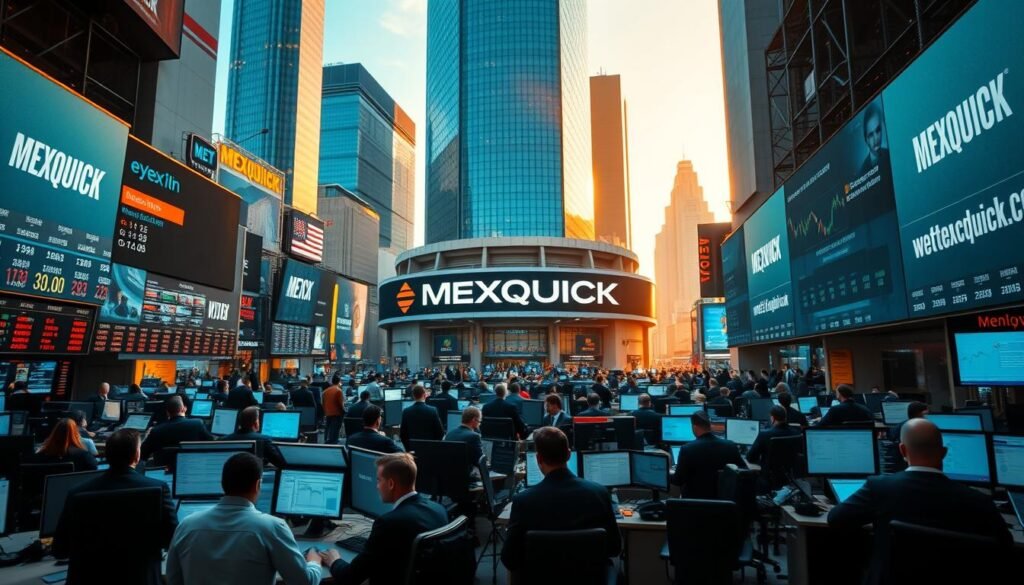
Stock exchanges and the stock market
Stock exchanges like the NYSE and NASDAQ match buy and sell orders. Traders see live quotes and a transparent price. Companies raise capital by issuing shares; investors buy and sell on exchange order books.
Bond market basics
Government and corporate bond issuance funds long-term needs. Coupons, maturity and credit risk set yields. Investors compare yields to decide which bond suits their goals.
Money, commodity and derivatives venues
Money markets handle short-term funding: commercial paper, time deposits and bank lending keep liquidity moving in minutes.
Commodity trading splits soft items (coffee, sugar) and hard goods (oil, gold). Spot trades settle now; standardized futures contracts help hedge or speculate.
Derivatives—futures, options, forwards and swaps—help with risk management for interest rates, currencies and commodities.
FX, crypto and the plumbing behind trades
Foreign exchange is the deepest market for currency flows and trade finance. Crypto and digital asset venues blend fintech with custody, trading and settlement.
“Efficient venues turn orders into liquidity and keep capital flowing.”
- Spot and interbank lending power settlement and short-term liquidity.
How capital moves: lenders, intermediaries, and borrowers
Money flows start with savers and ends with projects that need funding. Lenders include individuals (savings, pensions, insurance premiums), companies with surplus cash, and institutional pools like pension funds and insurers.
Financial intermediaries link supply and demand. Banks take short-term deposits and transform that money into longer loans. Investment banks underwrite new issues while asset managers allocate investment across funds.
Lenders
Individuals and pension plans supply steady funds. Corporations with cash may lend or invest. Insurers collect premiums and seek returns that match liabilities.
Intermediaries
Banks and banking services create credit and liquidity. Investment banks package offerings, and asset managers distribute them to investors.
Borrowers
Borrowers range from households needing mortgages to companies raising working capital or funding mergers. Governments issue bonds to fund public needs.
“Issuance can move from underwriting to trading in minutes for some instruments, or over longer cycles for complex deals.”
- Capital market structures match time horizons, risk appetite, and return goals.
- Price signals and credit spreads help discipline borrowing costs.
- International financial links widen investor pools and currency choices.
Primary vs. secondary markets and why liquidity matters
New issuance and everyday trading serve separate roles but work together to keep capital flowing.
Issuance and IPOs in the primary arena
In the primary market, issuers sell new securities directly to investors. An IPO brings fresh shares to the public and funds growth.
Issuance sets initial allocation and helps firms raise cash. Underwriters and banks structure the deal and set an offering price.

How price forms in the secondary arena
After issuance, trading happens among investors. On a stock exchange, order books match buy and sell orders and reveal the live price.
Elsewhere, dealers quote prices and market makers supply liquidity by buying or selling from inventory. That activity keeps spreads tight and trades fast—often in minutes.
Liquidity, value, and transaction costs
Liquidity means you can sell without a big loss. High trading volume, narrow bid-ask spreads, and strong turnover show healthy liquidity.
Time and market depth matter: large orders can move price if there are few counterparties. Traders use limit orders, slices, or algos to limit impact.
| Feature | Equities | Corporate Bonds | Government Bonds |
|---|---|---|---|
| Typical liquidity | High for large caps | Variable; lower in small issues | Very high for Treasuries |
| Price discovery venue | Stock exchange order books | Dealer screens or platforms | Electronic auctions and interdealer trading |
| Execution speed | Seconds to minutes | Minutes to hours | Seconds to minutes |
“Robust secondary markets lower the cost of capital by assuring investors they can exit later.”
Key financial assets and instruments you’ll encounter
This quick primer maps the main instruments investors see most often and explains how cash flow and risk differ among them.
Equities and ETFs: ownership, dividends, and index exposure
Equities represent ownership in companies. Shareholders may earn dividends and benefit if the company grows in value.
ETFs bundle many securities to track an index. They trade intraday like stocks, giving easy index exposure and diversification.
How investors buy: investors buy shares and ETFs using price quotes and liquidity on exchanges, often completing trades in minutes.
Bonds and notes: coupon, maturity, and credit risk
Bonds pay coupons and return principal at maturity. The issuer’s credit quality affects both the bond’s price and yield.
Longer maturity usually means greater sensitivity to rate moves. You can assess value with yield-to-maturity and credit spreads.
- Core assets: equities, ETFs, and fixed‑income instruments have different cash flows and risk profiles.
- Valuation: discounted cash flows, credit spreads, and yield measures show potential value.
- Issuer role: companies issue equity or debt, and capital structure choices change investor returns.
- Practical tips: check ETF index rules, bond duration, and a stock’s dividend policy before investing.
“Diversify across asset types to match risk tolerance and time horizon.”
Derivatives and risk management in practice
Derivatives are tools traders and treasurers use to lock in price and limit losses across rate and currency moves.
Using futures and options to hedge rates and currency exposure
Derivatives are contracts whose value comes from an underlying asset such as rates, currencies, equities, commodities, or bonds.
For example, Treasury futures let a manager hedge duration in a bond portfolio. Currency forwards lock in an exchange rate for an overseas cash flow.
Clearing, standardization, and exchange vs. OTC
Exchange-traded tools are standardized and clear through a central counterparty. That daily settlement and margining reduce counterparty risk.
OTC trades offer custom terms but often require central clearing today to lower systemic risk.
Regulation: Dodd-Frank and MiFID II
Post‑2008 reforms increased transparency and reporting. Dodd‑Frank pushed central clearing in the U.S., while MiFID II raised openness and investor protection in the EU.
“Ongoing analysis and governance help ensure derivatives mitigate rather than amplify risk.”
| Use case | Instrument | Benefit |
|---|---|---|
| Hedge bond duration | Treasury futures | Quick offset of interest-rate exposure |
| Lock FX cash flows | Currency forwards | Fixes exchange rate for planned payments |
| Manage rate swaps | Interest rate swaps | Transform floating to fixed payments |
Market behavior, analysis, and trends to watch
Behavioral cues, data flow, and trading speed often decide whether a trend lasts or fails. This section highlights ideas to help you read price action and respond with discipline.
Dow theory vs. the random walk
Dow theory underpins technical analysis with trend stages and confirmations. It asks: is a price trend intact or reversing?
Academics often favor the random walk view, which holds that past price changes give little reliable signal about the next move. Use both perspectives: trend tools for timing, and caution for overconfidence.
Volatility, psychology, and bubbles
Volatility reflects collective emotion—fear and greed can push price away from fundamentals.
Bubbles form when optimism detaches valuations from cash flows and risk. Watch sentiment indicators and volume to spot excesses early.
Algorithmic and high-frequency trading
Algorithmic and frequency trading react to news, order-book shifts, and statistical edges in minutes or less.
These players can amplify short-term moves but also add liquidity. Monitor news cadence and execution prints to understand sudden repricing.
“Time horizon matters: short-term signals often differ from long-term valuation drivers.”
- Link interest rates and liquidity to broad repricing: policy moves can shift risk premiums across assets.
- Interpret price alongside macro indicators, earnings, and positioning data for clearer analysis.
- Recognize how money flows, rebalancing, and passive index effects can intensify moves without fresh news.
- Blend sound finance principles with robust risk controls and skepticism about overfitting models.
Conclusion
Put simply, networks of banks, exchanges, and investors turn idle cash into productive capital.
This guide shows how savings flow through accounts and banking channels into companies and public projects via stock exchange listings, bonds, and other contracts. The broad landscape spans the stock market, foreign exchange, money venues, and capital markets.
Core takeaways: liquidity and price discovery matter most—value comes from risk, time, and cash flows. Shares and bonds trade where buyers and sellers meet, often on an exchange, so investors buy with clear exit paths.
Practical steps: set goals, pick the right account, align with risk tolerance, and start with simple instruments before moving to complex strategies. Keep learning about management, regulation, and how policy in New York and beyond affects price and access.
Actionable confidence: you can open accounts and explore core instruments in minutes, then refine allocations as money needs and market conditions evolve.
FAQ
What is the simplest way to describe a market and why does it matter?
A market is any platform where buyers and sellers exchange assets such as stocks, bonds, currencies, or commodities. It matters because markets set prices, allocate capital, and allow savers and borrowers to connect so businesses grow and people earn returns.
Who should read this guide and what will they learn?
This guide is for individual investors, students, small-business owners, and anyone curious about how money moves. You’ll learn core terms, how different venues operate (exchanges, banks, interbank), the role of intermediaries, and practical basics of equities, bonds, and risk tools like futures and options.
What key terms should I know up front?
Start with capital (funds available for investment), securities (tradeable financial claims like shares and bonds), investors (those who deploy capital), and interest rates (cost of borrowing). These shape pricing, returns, and policy decisions in the U.S. and globally.
How do stock exchanges like the NYSE and NASDAQ work?
Exchanges provide a regulated venue for buying and selling shares. Companies list via IPOs to raise capital; investors trade listed shares, and exchange rules plus market makers help with price discovery and liquidity so orders fill efficiently.
What’s the difference between primary and secondary markets?
The primary market is where new securities are issued—think IPOs or bond placements. The secondary market is where existing securities trade among investors. The secondary market creates liquidity that makes primary issuances attractive to issuers.
How do bonds differ from stocks?
Bonds are debt: issuers pay coupon interest and return principal at maturity. Stocks are equity: holders own part of a company and may receive dividends but face share-price risk. Bonds usually offer steadier income; stocks offer growth potential.
What role do banks and asset managers play as intermediaries?
Banks accept deposits, provide loans, and facilitate payments. Investment banks underwrite securities; asset managers pool investor capital into funds or ETFs. These intermediaries channel savings to borrowers and reduce transaction costs.
What are money markets and why do they matter for short-term funding?
Money markets handle short-term lending and borrowing—instruments include Treasury bills, commercial paper, and time deposits. They provide liquidity for banks, companies, and governments to manage cash flows and short-term funding needs.
How do derivatives like futures and options help manage risk?
Derivatives let parties lock in prices or hedge exposures to interest rates, currency moves, or commodity swings. Futures and options transfer risk between participants without requiring immediate ownership of the underlying asset.
What is the foreign exchange (FX) market and who trades there?
FX is the global market for currencies. Participants include commercial banks, corporations, central banks, hedge funds, and brokers. FX trades set exchange rates that influence trade, investment flows, and multinational earnings.
How do liquidity and transaction costs affect my ability to buy or sell quickly?
Liquidity reflects how easily an asset can be bought or sold without moving the price. High liquidity lowers transaction costs and slippage, making it easier to enter and exit positions. Thin markets raise costs and increase price impact.
What is the difference between spot markets and futures markets?
Spot markets settle immediate delivery of an asset at today’s price. Futures markets trade contracts that commit parties to transact at a future date and price. Futures help with price discovery and hedging but involve margin and standardized terms.
How do interest rates influence asset prices and investment decisions?
Interest rates set the discount for future cash flows. When rates rise, bond yields increase and present values of stocks can fall. Rates also affect loan costs, savings account returns, and corporate investment choices.
What should retail investors know about ETFs and index funds?
ETFs and index funds pool many securities to offer diversified exposure to an index or sector. They lower single-stock risk, reduce management fees compared with active funds, and trade like stocks (ETFs) for intraday access.
How do exchanges and over-the-counter (OTC) markets differ for derivatives?
Exchange-traded derivatives are standardized, cleared through central counterparties, and offer transparency. OTC contracts are customized between parties, offering flexibility but often carrying higher counterparty risk unless cleared.
What role do regulation and rules play in protecting investors?
Regulations such as Dodd-Frank in the U.S. aim to increase transparency, reduce systemic risk, and protect consumers. Rules govern disclosure, trading conduct, and capital requirements for banks and broker-dealers.
How do algorithmic and high-frequency trading affect price moves and volatility?
Algorithmic trading speeds order execution and can tighten spreads, improving liquidity. But high-frequency strategies can amplify short-term volatility and cause rapid price swings during news or stress events.
What is the bond yield curve and why should I watch it?
The yield curve plots yields across maturities. A normal upward slope signals expected growth and inflation; an inverted curve (short rates above long rates) can signal recession risk and affects borrowing costs across the economy.
How can I start investing with limited capital?
Begin with broad, low-cost ETFs or index mutual funds, use dollar-cost averaging, and prioritize an emergency savings buffer in a bank account or money-market vehicle. Keep fees low and stay focused on long-term goals.