
Intraday strategies let traders open and close positions within the same session to capture short-term price moves.
This approach depends on fast execution, live market data, and disciplined risk rules. Many beginners lose money at first, so practice in simulators and a written plan are essential.
Institutional firms and high-frequency algorithms dominate speed and execution, so retail traders must focus on process, tools, and a clear edge.
Start with a reliable U.S. broker, real-time data, advanced charting, and stable high-speed internet. Use strict stop-losses, cap per-trade risk, and close positions before the bell to avoid overnight gaps.
This guide covers definitions, mechanics, U.S. rules (including FINRA/SEC standards), platform setup, technical analysis, orders and strategies, risk management, psychology, practice, taxes, timing, and final steps toward consistent success.
For practice with real-time data and a demo balance, consider platforms like MEXQuick to build skills before risking capital.
Key Takeaways
- Intraday methods rely on speed, data, and strict risk controls.
- Most beginners lose early; use simulators and a written plan.
- Tools: a U.S. broker, live market data, charting, and fast internet.
- Limit per-trade risk, set daily loss caps, and close before the bell.
- Expect heavy competition from institutions and HFT; prepare to adapt.
What Is day trading?
Day trading means opening and closing positions within one market session to capture short-term price moves. This applies across U.S. stocks, options, futures, forex, and other liquid assets.
Definition, markets, and how intraday buy-sell works
Intraday mechanics rely on fast entries and exits, frequent monitoring, and tight execution to manage moves measured in cents. Traders use chart signals, scanners, and live news to find setups with volume and volatility.
How intraday operators differ from other investors
Active traders may hold positions for days, while long-term investors focus on fundamentals and compounding over years. In contrast, session operators close positions before the bell to avoid overnight gap risk from earnings or macro headlines.
- Liquidity and tight spreads help get fills close to intended price and reduce slippage.
- Scanners surface stocks with unusual volume, gaps, or range behavior for a focused watchlist.
- Small average gains per trade mean consistent execution, disciplined stops, and a solid risk-to-reward plan are essential to net profit after costs.
How Day Trading Works in Practice
Practical session work begins with a morning routine: screens, watchlists, and mapped price levels for high-probability setups.
Volatility, liquidity, and capturing short-term price moves
Volatility creates the range that allows small gains to add up. Without range expansion there is little opportunity for quick entries and exits.
High liquidity tightens spreads and improves fills. Traders scan for unusual volume and premarket gaps to shortlist candidates.
Tools professionals use: real-time data, charts, and news feeds
The core tools are consolidated real-time data, multi-time-frame charts, Level II, and time & sales. Streaming news feeds detect catalysts as they break.
Effective layouts, hotkeys, and alerts reduce reaction time when markets move fast. Precise order routing and a fast platform help compete with HFT execution.
Closing positions before the bell and why that matters
Most retail operators use hard stops and close positions before the close to avoid overnight earnings or macro headline gaps.
“Define entries, orders, and stops in advance; then trade the plan.”
- Build a morning watchlist from scanners and premarket volume.
- Set entries, stops, and targets before placing trades.
- Record each trade with notes and screenshots for review.
U.S. Rules, Margin Accounts, and the Pattern Day Trader (PDT) Rule
Regulators set capital and activity thresholds that every U.S. account holder must understand before increasing intraday exposure.
FINRA/SEC requirements and the $25,000 minimum
Pattern Day Trader status applies when a margin account executes four or more same-session round-trip trades within five business days and those trades exceed 6% of total activity.
If an account meets that standard, the holder must keep at least $25,000 in equity. If equity falls below that level, brokers restrict active sessions until funds are restored.
Buying power, margin, and maintenance
Margin accounts give additional buying power, but they raise risk and require careful monitoring of equity and maintenance requirements.
| Equity | Excess | Max Intraday Buying Power |
|---|---|---|
| $30,000 | $5,000 | $20,000 (4× excess) |
| $25,000 | $0 | $0 (minimum satisfied) |
| $15,000 | -$10,000 | Restricted / cash-only or limited |
- Violations can trigger broker-imposed limits, cash-only status, or account restriction for repeat breaches.
- Maintenance margin and margin calls can occur during volatile market moves; monitor real-time equity and open exposure.
- Read your broker’s PDT calculations, settlement rules, and policies to avoid unexpected flags.
“Understand rules and plan your trades so you keep access to capital when it matters.”
Risks, Losses, and the Realities of Returns
Most beginners face steep losses because they start without a clear edge and underestimate execution costs.
Why new entrants struggle is simple: insufficient edge, overtrading, weak stops, and unrealistic return expectations. These habits turn small setbacks into account-ending events.
Stress, time, and fierce competition
Constant screens and live feeds create high stress and long hours. Rapid decisions under pressure increase errors.
Institutions and HFT capture liquidity and exploit tiny inefficiencies faster than most retail traders can react. That increases slippage and reduces raw profit.
Manage risk, survive, then seek consistent gains
Simple rules save accounts: risk 1%–2% per trade, set a max daily loss, and step away when limits hit. Loss management matters more than prediction.
| Control | Example | Benefit |
|---|---|---|
| Per-trade cap | 1% of equity | Limits single losses |
| Daily stop | 3% account drawdown | Prevents tilt |
| Cost tracking | Commissions + slippage | Ensures edge exceeds fees |
Focus on process metrics: plan adherence, setup quality, and journal entries. Survival through disciplined risk control is the first step toward lasting success.
“Survive the losses, refine the process, then pursue profit.”
How to Start Day Trading: A Step-by-Step Setup
Begin preparation by checking your available capital, daily schedule, and tolerance for losses. This simple inventory sets realistic limits and helps you decide which markets and instruments fit your situation.
Assess risk tolerance, goals, and available capital
Be honest about what you can risk without harming bills or retirement. Define skill goals (consistency, process adherence) rather than only profit targets.
Create a written trading plan before placing real trades
A written plan should list eligible setups, exact entry and exit rules, per-trade position sizing tied to stop distance, and a daily loss cap that stops activity.
- Specify instruments, session times, and the indicators you will use.
- Outline premarket scanning, watchlist criteria, and an entry checklist.
- Validate the plan in a simulator over a meaningful sample before funding an account.
“Plan the strategy, test the process, and protect capital.”
Decide on broker, platform, and tools early so execution matches your plan. Commit to weekly reviews that use screenshots and journal notes to refine decisions and improve the chance of success.
Choosing a U.S. Broker and Platform
Pick a broker that matches your execution needs and budget. Many U.S. brokers now offer zero-fee stock trades but charge for advanced data, direct routing, or platform features. Focus on true execution quality, not just headline commissions.
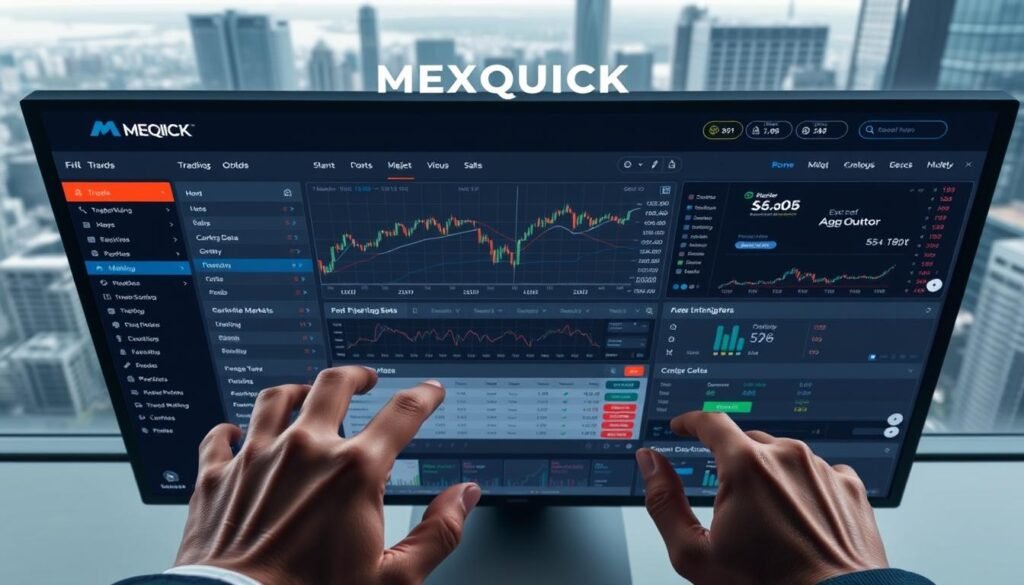
Execution speed and routing determine fills when markets move fast. Test latency, smart vs direct routing, and how the platform behaves during volatile sessions. A fast desktop client with hotkeys often beats mobile-only setups for active work.
What to compare before opening an account
- Fees: commissions, data subscriptions, and routing or exchange fees.
- Execution: platform latency, access to market centers, and reliability under stress.
- Data & charts: Level I/II depth, consolidated quotes, multiple time frames, and indicators.
- Order tools: hotkeys, bracket/OCO orders, conditional stops, and quick order edits.
- Support & PDT: responsive service and transparent pattern-day monitoring for margin accounts.
Quick comparative snapshot
| Feature | Why it matters | What to test in a paper account |
|---|---|---|
| Commissions & fees | Impacts net profit on frequent trades | Place several simulated trades and total costs |
| Routing & latency | Affects fills and slippage during spikes | Measure round-trip time and fill price variance |
| Data & charts | Supports setup identification and backtesting | Load multiple time frames and Level II depth |
| Order features | Enables rapid entries and risk control | Use hotkeys, OCO orders, and staged modifications |
“Open a paper account first to validate routing, layouts, and hotkeys before committing live funds.”
Building Your Day Trading Workspace and Tools
Fast data feeds, clear layouts, and redundant connectivity are the backbone of consistent execution. Set up a workspace that prevents technical surprises and keeps your focus on setups and risk.
Hardware: monitors, internet, and hotkeys
Use dual to quad monitors so charts, Level II, and news sit on dedicated screens. This reduces context switching and speeds decision making.
Prefer wired fiber or cable with a backup hotspot. Test failover so you have a plan if the ISP drops.
Program hotkeys for one-click orders and risk-defined exits to cut mouse delays and improve fills.
Software: scanners, backtesting, and broker integration
Run scanners that flag gap %, relative volume, and float movers. Sync watchlists into chart layouts for quick access.
Backtest rules and simulate position sizing before using real capital. Iterate as market character shifts.
Confirm broker-platform integration supports hotkey orders, bracket orders, and real-time sync of stops and positions.
News and economic calendars for trade catalysts
Subscribe to curated news feeds and keep an economic calendar for scheduled catalysts like CPI and jobs reports.
Color-code symbols and set alerts for VWAP touches, indicator crossovers, or key price levels. These reduce screen fatigue and help you act at the right time.
“Prepare, test, and have a documented contingency plan for platform freezes or ISP outages.”
Technical Analysis Foundations for Day Traders
Start with candlesticks. Each bar shows open, high, low, and close. These four values communicate whether buyers or sellers controlled that period.
Candle patterns and wicks reveal momentum shifts. Use 1-minute and 5-minute candles for precise entries. Check 15-minute or hourly charts for context.
Core indicators and how to use them
VWAP acts as an intraday value line. Trades above VWAP suggest institutional buying; below it suggests distribution. Treat VWAP as a reference, not a trigger, and size positions with clear stops.
EMAs (9, 20, 200) provide dynamic support and resistance. Use 9 EMA for quick pullbacks, 20 EMA for deeper retraces, and 200 EMA as a session pivot.
MACD confirms momentum changes. Use it to validate trend shifts rather than to initiate lone entries. RSI helps gauge exhaustion; avoid chasing moves when RSI shows extension.
Confluence, cleanliness, and process
Higher probability emerges when price, volume, VWAP/EMAs, and a candle pattern align. Confluence improves risk-to-reward and clarity on stop placement.
| Tool | Role | Practical use |
|---|---|---|
| VWAP | Intraday value | Mean-reversion entries, trend confirmation |
| 9 / 20 / 200 EMA | Dynamic S/R | Short pullbacks, deeper retracements, session pivot |
| MACD / RSI | Momentum & extension | Confirm moves; avoid overextended entries |
Keep charts clean. Avoid indicator overload. Save templates and capture screenshots of A+ setups to build a pattern library.
“Indicators support price action; they do not replace it.”
Combine this analysis with strict risk rules and post-trade review to turn observations into a repeatable strategy.
Order Types, Fills, and Trade Execution
Execution quality often hinges on matching order type to the setup and market liquidity. Choose the tool that fits the signal: speed or price control.

Market orders prioritize fills but can suffer slippage when spreads widen. Use them only when immediate execution matters and depth is healthy.
Limit orders control the price and reduce slippage risk, but they may not fill or fill partially. Near defined levels, limits preserve your risk plan.
Stops, brackets, and execution automation
Stop-loss orders cap downside and enforce discipline. Bracket orders bundle an entry, profit target, and protective stop to automate exits.
Program hotkeys for bracket flows so a single action places the full structure. Test these in a paper account to validate behavior.
Slippage, spreads, and Level II signals
Spreads widen in volatile moments and thin depth on Level II can amplify slippage at entry and exit.
Watch Level II and time & sales for hidden interest or a liquidity vacuum. Plan worst-case fills and reduce size in thin names.
| Scenario | Recommended order | Why it helps |
|---|---|---|
| High liquidity, clear setup | Marketable limit / Market | Faster fills with controlled slippage |
| Thin depth or wide spread | Limit | Protects price and risk tolerance |
| Defined entry with target | Bracket | Automates profit taking and protective stop |
Routing matters. Direct routes can improve fills for some venues but may add fees. Track fill rates and adjust routing when possible.
- Predefine acceptable slippage per setup and size accordingly.
- Use partial exits to scale out and move stops to breakeven as price confirms direction.
- Journal execution stats—fill rates, average slippage, and route—to refine strategy.
“Execution is a repeatable skill. Measure fills, reduce surprises, and protect capital.”
Core Day Trading Strategies
Choose a small set of approaches that fit your temperament and schedule. Specialize so you learn patterns, speed up decisions, and measure what works.
Momentum: buy high, sell higher
Momentum seeks strong directional moves and aims to buy high and sell higher. Use scanners for leaders breaking out on volume.
Size to liquidity, place tight stops, and seek at least a 2:1 risk-to-reward baseline.
Scalping: many small trades
Scalping uses rapid entries to capture tiny gains on many small trades. Accuracy and strict loss control matter more than win rate.
Limit one loss per session to protect cumulative gains.
Range and swing intraday setups
Fade or follow breaks at clear support and resistance. Define invalidation points, pre-plan targets, and keep size modest when price is choppy.
News-based strategies
Trade catalysts like earnings, guidance, or macro releases. Expect wider spreads and fast tape; reduce size or stand aside if liquidity evaporates.
- Plan: document entries, stops, adds, and exits and test in simulation first.
- Measure: track stats per strategy to confirm an edge.
“Specialize, measure, and protect capital.”
Risk Management and Position Sizing
Protecting capital matters more than chasing quick wins. A clear sizing plan prevents one bad entry from undoing weeks of work. Good controls let a trader learn without catastrophic setbacks.
The 1%–2% rule, daily caps, and drawdown limits
Many experienced traders cap per-trade risk at 1%–2% of account equity. Set a hard daily loss stop so you pause activity when limits are hit.
Also define a maximum drawdown for the account. Deeper drawdowns require much larger returns to recover, so protect capital first.
Stops, targets, and risk-to-reward
Calculate position size from the dollar risk and distance to stop: size = $risk per trade / (entry – stop).
Aim for a minimum 2:1 risk-to-reward so modest win rates can still produce net profit.
- Use bracket orders and immediate stops to avoid large uncontrolled losses.
- Reduce size after a string of losses to steady emotions and preserve capital.
- Keep pre- and post-trade checklists to ensure each setup follows the plan.
“Accept small, frequent losses; limit their size and protect the account.”
Track metrics—average loss, max loss, and variance—to refine position rules. In short, risk management is the core strategy that enables longevity and compounding of skill and capital.
Trading Psychology and Discipline
Good decisions under pressure come from routines, not impulse. Build a written plan and follow it as a contract with yourself.

Planning the trade and trading the plan
Plan the trade, trade the plan: write exact entry, stop, and target rules before you act. A concise checklist before each session reduces on-screen second-guessing.
Stick to the plan. If conditions change, document the reason before you deviate. That habit creates repeatable, measurable decisions.
Avoiding revenge trading and overtrading
Common emotional traps include chasing, FOMO, and revenge after a loss. These lead to size creep and poor entries.
Set objective pause triggers: two rule violations, or a fixed daily loss limit. When hit, step away and reset.
| Challenge | Preventive Rule | Benefit |
|---|---|---|
| Revenge trades | Stop after one loss and review | Limits compounding mistakes |
| Overtrading | Predefined session window & max trades | Reduces fatigue, improves quality |
| Decision fatigue | Scheduled breaks and end-of-day review | Sharper choices when re-entering |
| Impulse sizing | Fixed position sizing rules | Protects capital and process |
Use journaling and metrics to hold yourself accountable. Track rule adherence, setup quality, and emotional notes.
“Small planned losses are the cost of a repeatable strategy.”
Finally, cultivate patience. Wait for A+ setups that match your edge instead of forcing trades to hit arbitrary P&L targets. Long-term success depends as much on temperament and discipline as on analysis and strategy.
Practice First: Simulators, Backtesting, and Journaling
Start skill-building in a simulator so you prove rules and execution before risking capital. Paper accounts let a trader validate entries, exits, and risk controls under realistic pace.
Paper practice to validate your approach
Use a simulator to test your trading strategy across multiple sessions. Include partial fills, slippage, and commission to avoid an overly optimistic view.
How to keep a useful journal and measure edge
Record every trade: setup type, entry/exit, size, stop, target, screenshots, and emotional notes. That data fuels objective analysis.
- Compute win rate, average win/loss, profit factor, and max drawdown.
- Track time in trade and trade frequency to spot fatigue patterns.
- Run backtests on historical data to estimate expectancy and variance.
Iterate with a hypothesis mindset: change one variable at a time, retest, and log results. Build a playbook of A+ setups based on journal evidence.
“Only move to live size after stable simulated success across varied market conditions.”
Taxes, Records, and Compliance in the United States
A clear tax and bookkeeping system helps a trader avoid surprises and keeps an account audit-ready.
Ordinary income, wash sales, and basic rules
Frequent short-term gains are usually taxed as ordinary income in the U.S., which affects net returns after taxes and fees.
Wash sale rules disallow losses if you repurchase a substantially identical stock within 30 calendar days. That loss is deferred into the new lot’s cost basis.
Record-keeping essentials and broker reports
Keep independent logs of every trade confirmation, fee, and adjustment. Brokers provide year-end forms, but do not rely solely on them.
Use tax-lot aware software or broker reports to track cost basis, wash-sale adjustments, and realized gain/loss per account.
| Item | What to save | Recommended action |
|---|---|---|
| Trade confirmations | Entry/exit, size, price, fees | Export monthly; reconcile with broker |
| Wash sale flags | 30-day repurchases, adjusted basis | Use tax-lot software; adjust records |
| Year-end forms | 1099-B, 1099-MISC (if issued) | Compare to your ledger; correct discrepancies |
| Backups | Platform exports, PDFs, screenshots | Store encrypted copies offsite for audits |
- Set aside a tax reserve from profits to avoid year-end shortfalls.
- Keep trading records separate from personal finances for clarity during reviews.
- Consult a CPA familiar with active traders and entity elections to confirm treatment and choices.
“Meticulous records and proactive tax planning preserve your edge and reduce surprise liabilities.”
When to Trade, When to Stand Aside
Time matters. Pick windows when volume and momentum favor your strategy, and step back when the market offers poor setups.

Time-of-day patterns and avoiding low-quality setups
The opening 30–60 minutes usually bring the most volatility and liquidity. That creates opportunity, but also larger risks from fast moves.
Midday often becomes range-bound and choppy. Many traders reduce size or stand aside to avoid low-quality whipsaws that erode edge.
The final hour — the “power hour” — can revive volume and produce trend continuation or sharp reversals into the close. Treat it like a second session: plan entries and exits in advance.
- Filter for A+ setups only when volatility aligns with your rules; avoid FOMO during slow stretches.
- Use scheduled news (earnings, economic reports) to anticipate spikes; widen stops and cut size to handle wider spreads.
- Predefine no-trade conditions (erratic price action, untradeable spreads) to protect capital.
Track your performance by time of day and concentrate activity where your stats are best. Remember: sitting out is an active, disciplined choice that supports long-term success.
“Quality over quantity — trade less, trade better.”
Conclusion
Conclude with a clear plan: learn the fundamentals, respect U.S. rules like the PDT minimum, and protect your capital before seeking larger gains. ,
Risk management beats greed. Use 1%–2% per trade, a daily loss cap, and size positions to your equity. Close positions before the bell to avoid overnight surprises.
Choose reliable brokers and fast execution tools that match your workflow. Focus on a few strategies that fit your temperament and validate them in simulators. Keep a strict journal and backtest changes.
Psychology, patience, and rules separate persistent losses from gradual success. Start small, build skill, then scale capital responsibly. With discipline and process, day trading can be pursued professionally and responsibly.
FAQ
What is intraday buying and selling and how does it differ from longer-term investing?
Intraday buying and selling involves opening and closing positions within the same market session to capture short-term price moves. Unlike long-term investors who hold shares for months or years seeking fundamental growth, intraday operators rely on technical analysis, real-time data, and fast order execution to profit from volatility and liquidity during the trading day.
What markets and instruments can I use for intraday strategies?
U.S. equities, exchange-traded funds (ETFs), options, and futures are common choices. Stocks and ETFs offer deep liquidity and clear price action. Options and futures provide leverage but add complexity and time decay considerations. Choose instruments that match your capital, risk tolerance, and the platform’s data feeds.
Which tools do active traders use to make decisions?
Professionals use real-time market data, multi-frame charts, order flow and Level II depth, news feeds, economic calendars, and backtesting software. Reliable hardware, fast internet, and hotkeys speed order entry. A broker with low latency order routing and robust charting completes the setup.
What are the key U.S. rules about pattern day trading and margin?
FINRA’s Pattern Day Trader rule requires accounts flagged as PDT to maintain at least ,000 equity if they execute four or more round-trip trades within five business days. Margin accounts increase buying power but require maintenance and amplify both gains and losses.
How much capital do I need to start and why does it matter?
Starting capital depends on strategy and regulator rules. To avoid PDT restrictions when making frequent intraday trades, many begin with ,000. Smaller accounts can trade cash-only but face limited buying power. Adequate capital reduces risk of forced exits and allows proper position sizing.
Why do most new entrants lose money and how can I manage expectations?
New entrants often lack a tested plan, proper risk controls, and experience with slippage and market noise. Overtrading, poor stop placement, and emotional decision-making erode returns. Use realistic targets, paper trade, set max daily losses, and focus on consistency over quick gains.
What are common intraday strategies I can learn?
Core approaches include momentum setups (riding strong directional moves), scalping (many quick trades with tight targets), range intraday plays using support and resistance, and news-driven reactions. Each requires specific risk rules, entry triggers, and exit criteria.
How should I size positions and set risk limits?
Position sizing often follows the 1%–2% per-trade risk guideline: risk only a small percentage of capital on any single trade. Establish stop-loss levels, calculate risk-to-reward ratios before entry, and enforce a daily loss cap to preserve capital during drawdowns.
Which order types help control execution and risk?
Market orders prioritize speed but can suffer slippage. Limit orders control entry price. Stop-loss and bracket orders help automate exits. Understand how your broker handles order routing and partial fills to reduce unexpected execution outcomes.
How do I validate a strategy before using real capital?
Start with simulated trading and backtesting using historical intraday data that matches your time frames. Keep a detailed journal tracking setups, trade rationale, outcomes, and statistical edge. Gradually move to small live sizes after consistent simulated profitability.
What psychological habits support consistent performance?
Strict discipline, following a written plan, avoiding revenge trades after losses, and accepting small, controlled losses are essential. Regular review, realistic goals, and time management reduce stress and improve decision-making under pressure.
How do news and economic calendars affect session selection?
Scheduled releases and company announcements often create rapid price moves and higher volume. These events can offer opportunities but also increase risk. Many professionals trade around known catalysts and avoid unpredictable weekends or after-hours spikes.
What tax and recordkeeping basics should U.S. traders know?
Active gains are generally taxed as ordinary income or short-term capital gains depending on structure. Be aware of wash-sale rules when selling losses and repurchasing the same securities. Keep detailed trade logs, monthly statements, and consult a CPA for filing strategies.
How important is broker selection and platform speed?
Very important. Fast execution, reliable uptime, clear fee structures, quality market data, and advanced charting determine whether a strategy is practical. Compare commissions, data packages, and whether mobile or desktop platforms better suit your workflow.
When should I sit out instead of trading?
Stand aside when volatility is abnormally low, when setups fail your criteria, or after a string of losses that impair judgment. Preserve capital and wait for high-probability setups aligned with your tested edge rather than forcing trades.