
Visual charts decode trader behavior fast. A single bar shows open, high, low and close for a chosen period. The body marks the open-to-close range while the wicks reveal intraperiod extremes.
Why this view matters: it compresses buyer-versus-seller battles into clear signals that feed modern technical analysis and quick price movement reads. Over time, these bars join into recognizable formations traders use to spot support, resistance, and possible trend reversal setups.
This guide aims to teach you how to identify each candlestick pattern, read market psychology, and apply rules inside a robust trading plan. Practice with confirmation tools like trend, volume, and structure, and use strict risk controls when you act on a bullish reversal or bearish reversal clue.
Later sections cover anatomy, timeframes, key examples (hammer, bullish engulfing, morning star, evening star), and step-by-step trade planning to help you push price edges in your favor.
Key Takeaways
- One bar shows OHLC data, making it central to technical analysis.
- Use candlestick pattern signals with trend and volume confirmation.
- No single sign guarantees a win; context and risk rules matter most.
- Learn common reversal pattern setups and how to plan entries and exits.
- Journal trades to find which setups suit your timeframe and asset class.
What Are Candlestick Patterns and Why They Matter Today
Each bar compresses open, high, low, and close into a readable shape that hints at market intent.
Definition: A candlestick pattern is a repeatable visual formation made of one or more candles that helps interpret buyers sellers behavior and the likelihood of future price movement.
Users want to turn raw OHLC bars into actionable reads on momentum, exhaustion, and trend continuation or reversal. That is the practical intent behind studying these formations.
In 2025, fast algorithmic flows and headline-driven swings mean early recognition of shifts can improve timing for entries, adds, and exits. Traders now apply these signals across equities, forex, and crypto using advanced charting and volume overlays.
- Use with technical analysis: Trend direction, volume surges, and structure validate a signal.
- Cross-market utility: Same visual clues apply from ETFs to digital assets.
- Probabilistic edge: A pattern may hint at a bullish reversal or bearish reversal, but confirmation and risk controls are essential.
Practice on historical charts and demo accounts to sharpen recognition before committing capital. The rest of this guide breaks down criteria, psychology, and confirmation steps for each common candlestick pattern.
| Use | Why it helps | Quick tip |
|---|---|---|
| Timing entries | Shows short-term momentum shifts | Confirm with volume |
| Validating exits | Signals exhaustion or continuation | Align with trend |
| Cross-market signals | Reflects liquidity and sentiment | Adjust timeframe to style |
The Anatomy of a Candle: Body, Wicks, Color, and What They Signal
A candle’s form — body and shadows — converts raw quotes into clues about market intent.
Open, high, low, and close are the four core data points. The body shows the open-to-closing price range. Shadows (wicks) mark intraperiod highs and lows. Together they make each visual signal intuitive and fast to read.
Body size and momentum
Large bodies show strong directional conviction; wide green or white closes mean clear buying pressure. Small bodies suggest balance or indecision and a contest between buying pressure and selling pressure.
Upper and lower shadows
A long upper shadow often signals rejection near highs or profit-taking. A long lower shadow points to demand emerging near lows and possible support.
The closing price relative to the open sets color convention: green/white for up closes, red/black for down closes. That color helps you read sentiment at a glance.
Exact criteria: a hammer candlestick pattern has a small body near the top and a lower shadow at least twice the body. It highlights failed downside and possible shift to demand. An inverted hammer shows a long upper wick with a small lower wick and requires follow-through to be reliable.
- Sequences of long bodies with small shadows indicate trend persistence.
- Mixed bodies with long upper or lower shadows mark battles at key levels.
- Annotate notable upper shadow and lower shadow events at prior swings to study outcomes.
| Feature | Signal | Practical note |
|---|---|---|
| Large body | Strong momentum | Confirm with volume |
| Long upper shadow | Rejection / supply | Watch for reversal near resistance |
| Long lower shadow | Demand / support | Look for follow-through buying |
| Hammer | Possible bullish shift | Needs confirmation after a downtrend |
How Candlesticks Form Across Timeframes
Timeframe changes reshape what each price bar tells you about market intent.
Each candle reflects the OHLC for its selected period. A daily bar aggregates many trades and shows more reliable conviction. A five-minute bar compresses far fewer prints and gives frequent, noisier readings.
Daily, hourly, and intraday differences
Start with a higher timeframe to define trend and major support and resistance. Then drill down to hourly or intraday charts for timing entries.
Intraday signals can be distorted by gaps, session opens, and liquidity swings. Rapid alternation of buyers sellers during low volume can create false setups.

Aligning signals with trend and volume
Confirm a setup with the dominant trend and fresh volume. A signal that matches HTF direction and shows rising participation has higher odds than a counter-trend clue in thin markets.
- HTF: define trend and levels.
- MTF: validate the setup and look for follow-through.
- LTF: pick precise entry and stop placement.
| Timeframe | Typical info | Risk | Practical use |
|---|---|---|---|
| Daily | Aggregated trend and structure | Slower signals, fewer false reads | Define bias and major levels |
| Hourly | Intermediate swings and setups | Balance of detail and reliability | Confirm entries with HTF |
| 5–15 min | High detail, fast signals | Prone to noise and fake moves | Precise entry/exit execution |
| Volume overlay | Shows participation | Low volume increases false signals | Use to filter and confirm moves |
Journal outcomes by timeframe to find where your edge lives. Track stops and targets by chart scale to calibrate risk-reward and improve consistency in technical analysis.
Foundational Concepts: Trend, Context, and Support/Resistance Levels
A reliable entry begins with a view of momentum, trend, and where price sits on the chart. Context defines whether a visual signal has merit or is noise.
Market context means picking a dominant trend, noting momentum strength, and checking price versus moving averages and recent swing highs and lows.
Using support resistance levels to validate signals
Marking support resistance and key swing points refines trade location. Bullish setups near support in an uptrend have higher odds. Bearish setups near resistance in a downtrend behave similarly.
Confluence matters: a candlestick pattern that aligns with trend, a major level, and rising volume is far more credible than an isolated bar in the middle of a range.
Why context beats isolated candles
Trend reversal attempts require more evidence than continuation trades. Expect multi-bar confirmation, breaks of structure, or retests before increasing exposure.
Rule of thumb: the candle begins the hypothesis; structure and flow justify the trade.
Build a pre-trade checklist that forces pattern-plus-context validation. Include trend filter, level proximity, volume confirmation, and a regime note (high vs. low volatility) for stop and target sizing.
| Check | What to look for | Why it matters |
|---|---|---|
| Trend direction | Higher highs/lows or lower highs/lows | Bias filters false signals |
| Level proximity | Near support resistance or swing point | Supply/demand imbalance amplifies moves |
| Volume | Spike or increasing on confirmation candle | Shows participant commitment |
| Regime | High vol vs. low vol | Adjust stops and targets accordingly |
Final note: track failed signals at strong levels. Those failures often reveal hidden liquidity and can precede powerful moves in the opposite direction.
Bullish Reversal Candlestick Patterns
Bullish reversal signals show where selling has exhausted and buyers may regain control. Use them near support and with rising volume for higher odds.
Hammer and inverted hammer
Hammer candlestick pattern: a small body near the top with a lower shadow at least twice the body after a downtrend. A green close and next-day follow-through strengthen the read.
Inverted hammer has a long upper shadow and a tiny lower wick. It can hint at upside interest but needs stronger confirmation because overhead supply may still exist.
Bullish engulfing and piercing line
Bullish engulfing: a small red first candle followed by a larger green that fully engulfs the prior body. This shift often marks buyers taking control.
Piercing line: a gap down then a green bar that closes above the prior candle’s midpoint — the close above midpoint suggests downside momentum faded.
Morning star and morning star doji
Morning star sequences show exhaustion: a long down bar, a small star or doji, then a strong green that confirms the turn. The final candle should be decisive.
Three white soldiers
Three white soldiers are three long green sessions with small shadows and higher opens/closes. This sequence indicates sustained buying and a strong bullish thrust.
Confirmation & entries: wait for the follow-through first candle to hold gains. Enter above the confirmation high and place stops below the pattern low. Avoid chasing extended moves; prefer measured pullbacks for better risk-reward.
Bearish Reversal Candlestick Patterns
Bearish reversal setups warn traders that supply may soon outpace demand near chart highs.
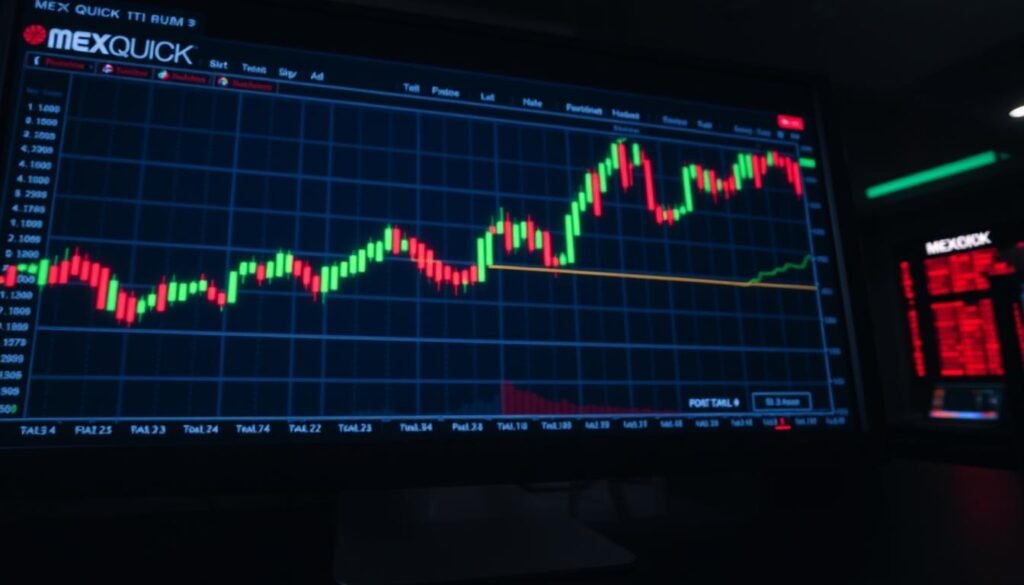
Hanging man and shooting star: warning at resistance
Hanging man appears after an advance and has a long lower wick at least twice the body. It shows intraday selling that buyers recovered from, which can be a caution when it forms at resistance.
Shooting star sports a long upper shadow and a small body near the low. That long upper shadow signals rejection at higher prices and often precedes supply overcoming demand near tops.
Bearish engulfing and dark cloud cover: closes below midpoint
Bearish engulfing is defined when a large red body fully engulfs the prior green body. This rule signals a shift from accumulation to distribution and often marks a peak or slowdown.
Dark cloud cover opens above the previous close then closes below its midpoint. A close beneath midpoint with short shadows often marks a decisive momentum flip to the downside.
Evening star and evening star doji: topping formations
An evening star sequence begins with a long up day, a small indecisive star or doji, then a strong down day that erases gains. The doji variant adds indecision and strengthens the case that buyers lost control.
Three black crows: persistent selling pressure
Three black crows are three consecutive long red bars with small shadows, each opening near the previous close and pushing lower. After extended advances or at clear resistance zones, this sequence indicates persistent selling pressure.
Execution notes: prefer these setups at resistance with rising volume for confirmation. Enter below the confirmation low and place stops above the pattern high. Stand aside when nearby support could absorb selling.
Risk reminder: avoid relying on a single candle. Wait for structural confirmation like a lower low or failed retest. Track failed bearish signals too—an engulfing that stalls can spark a sharp short squeeze.
Continuation Signals: When the Trend Pauses, Not Reverses
Continuation clues show when a dominant trend merely pauses to digest gains before resuming. These setups help traders tell the difference between a true reversal and a temporary break in momentum.
Doji and spinning top: indecision and consolidation
Doji forms when open ≈ close, signaling market indecision. Alone it is neutral, but inside a move it often marks a short pause.
A spinning top has a small body with roughly equal upper and lower shadows. It reflects consolidation after a push and can precede a continuation when the trend holds.
Rising three methods and falling three methods
Rising three methods begin with a long bullish impulse, then several small bearish or neutral candles that stay within the first candle’s range, and end with a strong bullish close. This shows weaker selling pressure inside the advance and a likely resumption.
Falling three methods mirror this on the downside: a strong decline, a cluster of small bullish candles contained within the impulse range, and then a renewed drop that confirms continuation.
- Containment matters: the small candles must remain inside the initial candle’s range for the pattern formed to be valid.
- Volume typically contracts during the pause and expands on the resumption candle, supporting the continuation read.
- Enter on the break of the continuation candle; place stops beyond the consolidation cluster.
- In range markets these signals lose edge; use moving averages or trendlines to confirm trend alignment.
Candlestick Patterns in Technical Analysis
Layer trend filters and participation measures to separate meaningful signals from noise. Start by defining the trend with moving averages. A rising 50- or 200-day average shows bias. A falling average signals a downtrend.
Combining price action with moving averages and volume
Identify the trend with one or two moving averages, then watch for a qualifying candlestick pattern near those lines. Volume confirms commitment. A breakout or an engulfing pattern that appears with above-average volume has higher credibility.
Confluence with support resistance and trendlines
Mark support resistance levels and trendlines before scanning. Patterns that form at these zones carry more weight because they align with prior supply or demand.
- Workflow: define trend via moving averages, map support resistance levels, draw trendlines, then scan for a qualifying candlestick pattern at those zones.
- Volume matters: rising volume on a breakout reduces the chance of a false move and validates price movement.
- Momentum filters: add an oscillator to avoid fading persistent trends with countertrend entries.
Risk and trade management: place stops beyond pattern highs/lows and use an ATR buffer to fit volatility. Use multi-timeframe alignment to reduce whipsaws. Take partial profits at logical swing highs/lows and trail stops behind higher lows or lower highs.
Confluence does not guarantee success, but stacking trend, level, and volume shifts the odds in your favor.
Reading Shadows: Long Upper Shadow vs Long Lower Shadow
Long shadows often tell a clearer story about intraday supply and demand than body size alone.
A long upper shadow usually shows an intraperiod rally met by sellers or profit-taking. It often signals rejection near highs and rising selling pressure when it appears at resistance or a moving average.
By contrast, a long lower shadow indicates dips met by buyers. It suggests rejection of lows and fresh buying pressure when seen at support or prior swing zones.
Interpreting rejection and momentum shifts
Confirm with the next close. A follow-up candle that closes in the direction implied by the wick improves confidence that the move indicates real supply or demand.
Watch for intraday noise: early spikes can create dramatic wicks that fade by the close. Context and close location matter more than the wick alone.
- Clusters of similar wicks can show absorption before a directional break.
- High-volume rejection carries more weight than a wick on thin prints.
- Assets like crypto often produce wick-heavy bars; widen stops and reduce position size to handle volatility.
| Feature | Signal | What to watch |
|---|---|---|
| Long upper shadow | Rejection at highs / selling pressure | Forms at resistance or moving averages; confirm with close and volume |
| Long lower shadow | Rejection at lows / buying pressure | Appears near support or swing lows; follow-through buying strengthens the read |
| Mid-range shadow | Weaker signal | Avoid trading without nearby structure or confirmation |

Engulfing Patterns: Bullish Engulfing and Bearish Engulfing Explained
Engulfing setups show clear sentiment shifts when one session fully swallows the prior session’s body.
Bullish engulfing forms when a small red first candle is followed by a larger green that completely covers the prior real body. A bearish engulfing flips this: a small green first candlestick is overtaken by a larger red close. The first candle establishes direction; the second signals conviction.
Confirmation matters. Require the next close to follow the engulfing direction. Stronger reads occur at support or resistance and with rising volume. Avoid mid-range signals without structure.
First candle, second candle, and confirmation
The first candle shows initial bias. The second must fully engulf the first real body to form the pattern formed. Wait for the first candle after the setup to close in the same direction before entering.
Common traps and how to filter them
Watch for tiny first bodies and outsized second bodies during headline spikes; those often reverse. Filter with average volume and nearby swing levels. Use a moving average to avoid countertrend entries unless extra confluence exists.
| Rule | Why it matters | Practical filter |
|---|---|---|
| Second body engulfs first | Shows sentiment shift | Require full real-body overlap |
| Confirmation close | Reduces whipsaws | Enter after next-bar close |
| Location & volume | Improves win rate | Prefer support/resistance + rising volume |
| Timeframe | Signal reliability | Daily / 4H cleaner than 5–15min |
Stars and Soldiers: Morning/Evening Star and Three White/Black Setups
Stars and soldiers describe multi-session sequences that map exhaustion, a short pause, then decisive control transfer. The morning star shows a long red, a small star or doji, then a long green close. The evening star reverses that: long green, small star, then long red.
Entry, stop, and target planning
Psychology: the middle “star” marks hesitation; the final candle and its closing price confirm the new bias.
Entry tactics: enter above the morning star’s final green or below the evening star’s final red to limit slippage. Favor entries at support or resistance levels.
Stop placement: place stops beyond the pattern extreme — below the star cluster for longs, above it for shorts — to avoid normal noise.
Targets: use prior swings, measured moves based on the pattern height, and partial exits at logical levels to lock gains.
“Stops should respect normal volatility; targets should push price into open air, not straight into stacked resistance.”
- Three white soldiers: three successive strong green closes, each opening near the prior body and pushing price into the close, signal sustained demand.
- Three black crows: three long red days with small upper shadows show steady supply. Long upper or other upper shadow rejections often precede this sequence.
- Wick behavior — long upper or lower shadow — refines aggressiveness: short upper shadows on soldiers support early entries; long upper shadows on an advance argue caution.
| Setup | Entry | Stop | Target |
|---|---|---|---|
| Morning star | Above final green close | Below lowest star candle | Prior swing high / measured move |
| Evening star | Below final red close | Above highest star candle | Prior swing low / measured move |
| Three white soldiers | On break above last close or pullback | Below pattern low or ATR buffer | Trail with higher lows; partials at resistance |
| Three black crows | On break below last close or retest | Above pattern high or ATR buffer | Measured move lower; partials at support |
Filter & risk: favor these setups when volume expands on the decisive candle and the pattern forms at trend inflection or continuation zones. Backtest average excursion and hold time to size stops and targets sensibly for your market and timeframe.
How to Trade Candlestick Patterns Step by Step
Begin with a scan for high-quality setups that sit at meaningful chart levels. This keeps trades focused on locations where a signal can move price with conviction.
Identify
Step 1: Mark trend, support/resistance, and key swing points on a higher timeframe. Then scan for a candlestick patterns forming at those levels. High-quality setups appear at confluence zones, not mid-range.
Validate
Step 2: Confirm with basic technical analysis filters: dominant trend alignment, rising or confirming volume, and structure that supports a trend reversal or continuation. Check tape or volume profile when available to sense buyers sellers imbalance.
Execute
Step 3: Trigger on the close above or below the confirmation bar, or on a clean break of the pattern’s extreme. Avoid entering before completion to reduce false starts.
Manage risk
Step 4: Size positions using ATR or fixed-fraction risk. Place stops beyond the pattern extreme and adjust for volatility. Use scale-outs and trailing stops to protect gains.
Checklist for higher-probability setups
- Location: pattern at a pre-marked level.
- Trend: aligned with higher-timeframe bias.
- Volume: confirmation on the decisive candle.
- Execution rule: enter after confirmation close or breakout.
- Risk rule: defined stop and position size before entry.
- Contingency: hold rules for gaps, news, and low liquidity.
- Review: log win rate, MAE/MFE, and tweak details.
Work the process: a written checklist removes emotion and lets you trade setups that push price with measurable edge.
| Step | Action | Why it helps |
|---|---|---|
| Identify | Scan at confluence levels | Filters noise, finds weight-of-evidence |
| Validate | Trend + volume + structure | Improves odds of follow-through |
| Execute | Trigger on confirmation | Reduces whipsaws and false signals |
Reliability and Research: What Studies and Pros Say
Academic work and veteran traders reach a similar conclusion: visual trade signals help, but only with context. Technical analysis tools add structure and increase reliability.
Authors like Steven Nison and John J. Murphy recommend combining a candlestick pattern with trend, volume, and level filters. Empirical tests show raw signals give mixed returns. Adding trend alignment and volume spikes improves follow-through.
Effectiveness varies by market. Equities often show clearer moves after a gap, forex favors continuity, and crypto produces more noise. Tailor filters by asset and timeframe.
Why confirmation and risk management are essential
Wait for a close, structure break, or volume expansion before acting. That rule reduces false positives and clarifies what the pattern indicates.
- Normalize risk with ATR or volatility targeting to size positions consistently.
- Some setups, like bullish engulfing in an uptrend, show higher expectancy; countertrend trades need tighter filters.
- Pairs such as bullish engulfing vs. dark cloud behave differently across markets because of gap mechanics.
Process over names: planning, confirmation, and risk control drive edge more than any single visual label.
| Finding | Implication | Practical step |
|---|---|---|
| Mixed raw signal returns | Patterns alone are weak | Require trend & volume filter |
| Market variation | Different follow-through | Adjust timeframe and volatility rules |
| Research & pros | Support confluence approach | Backtest & forward test filters |
Common Mistakes Beginners Make with Candlestick Pattern Trading
Many beginners treat a visual trade signal as a trigger, not a hypothesis that needs context.
Trading patterns without context often means acting on a setup mid-range where odds are low. Signals near clear support resistance levels work far better than isolated bars. Avoid entering unless the pattern formed sits at a meaningful zone.
Misclassification is common. A small-body candle is not always a hanging man or a shooting star. Use strict size and wick criteria before labeling a formation.
- Skipping confirmation: entering before the bar closes invites whipsaws when selling pressure or buying strength fades.
- Oversized risk: sizing too large or moving stops after entry destroys long-term edge; stick to predefined risk limits.
- Overfitting: chasing every signal across markets dilutes focus; specialize where you can test an edge.
- Bias: avoid only hunting bearish or only hunting bullish reads; let trend and structure set the bias.
Log invalidated signals and review annotated charts weekly. Practice on a demo to build discipline and patience. Wait for the pattern formed plus confluence—not just the name—to justify a trade.
| Mistake | Why it hurts | Quick fix | Outcome |
|---|---|---|---|
| Trading mid-range | Low edge, more false signals | Trade at support resistance levels | Higher win rate |
| Mislabeling | Wrong setup rules applied | Use strict criteria for size/wicks | Fewer bad entries |
| No confirmation | Higher whipsaws | Enter after close or volume confirmation | Cleaner signals |
| Poor risk control | Single losses ruin equity | Predefine stop and position size | Stable performance |
Candlestick Patterns Cheat Sheet and Downloadable Resources
A compact visual map speeds recognition of major reversal and continuation setups when market speed demands quick decisions.
Quick-reference reversal and continuation map
At a glance: keep a one-page index that lists key reversals (hammer, inverted hammer, bullish/bearish engulfing, morning/evening star, three white soldiers, three black crows, dark cloud) and continuations (doji, spinning top, rising/falling three methods).
Include clear threshold cues: engulf prior real body, close below prior midpoint (dark cloud, closes midpoint), and long lower wick ≥2x body for hammers.
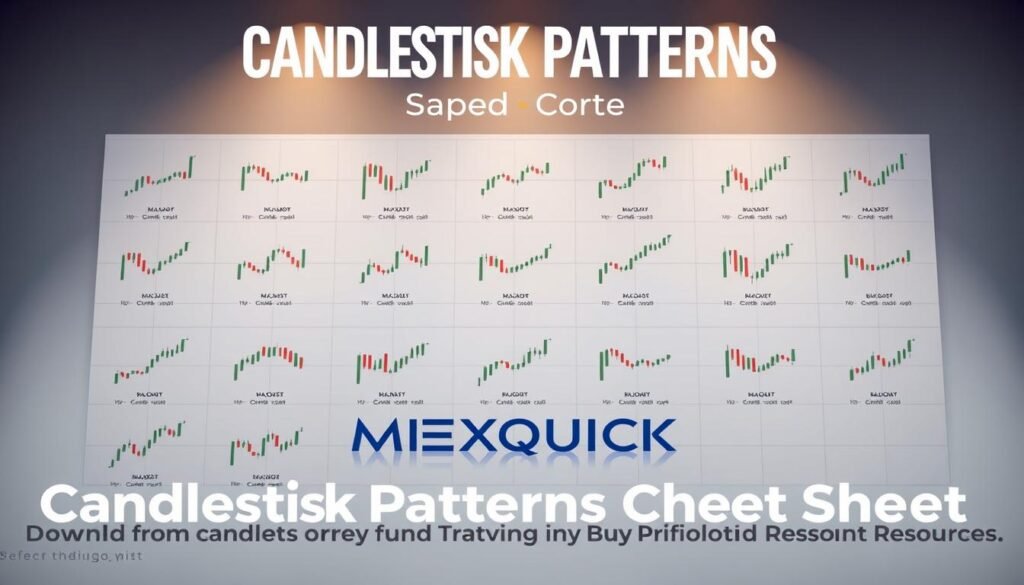
Distill stars and soldiers/crows sequences with short notes on entry, stop zones, and the need for the first candle confirmation. Add continuation rules for rising/falling three methods and consolidation cues from doji and spinning tops.
- Add a side legend: color conventions, body size meaning, and how the closing price affects conviction.
- Provide a print-friendly PDF and a one-page index traders can keep beside the screen to help push price decisions consistently.
- Include a minimal confluence checklist: trend filter, level proximity, and volume cue to reduce low-quality triggers.
Tip: link each entry in the download to deeper rule pages and encourage users to annotate with asset and timeframe notes as they test.
| Resource | Content | Use |
|---|---|---|
| Cheat sheet | Reversal & continuation map | Quick recognition |
| One-page index | Entry, stop, confirmation cues | Printer-ready reference |
| Checklist | Trend + level + volume | Filter low-quality signals |
Conclusion
Clear rules and measured confirmation convert chart cues into disciplined trades. Use this guide as a map: the core advantage of these visual signals is that they compress OHLC into readable cues for market psychology when combined with technical analysis context.
Favor location over labels. Wait for the first candlestick close that validates the hypothesis, especially for an engulfing pattern, morning star, or evening star. Place entries at support resistance and size stops to match volatility.
Know hallmark reversal setups — hammer candlestick pattern, inverted hammer, bullish engulfing, bearish engulfing, morning star, evening star — and multi-bar reads like three white soldiers and three black crows. Note mid-body rules such as a close that closes midpoint for dark cloud cover and long upper rejections like a shooting star or hanging man. These cues show shifts in buying pressure or selling pressure and hint at trend reversal or continuation.
Document triggers, stops, targets, and invalidation. Journal every trade, adjust filters, and refine confluence rules so the next pattern formed has higher odds of pushing price back into profitable action.
FAQ
What is a candlestick pattern and why does it matter for trading?
A candlestick pattern is a visual formation on a price chart that shows open, high, low, and close for a given timeframe. Traders use these formations to read buying and selling pressure, spot potential reversals or continuations, and make entry or exit decisions. In modern 2025 markets, quick interpretation of price action remains essential alongside volume and moving averages.
How do I read the four data points of a candle?
Each bar shows open, close, high, and low. The body indicates direction and momentum: a larger body means stronger buying or selling pressure. Upper and lower shadows reveal rejection levels where price moved but was pushed back, helping identify nearby resistance and support.
Do signals differ across timeframes?
Yes. Daily bars often indicate stronger, more reliable signals than minute or hourly bars because they capture broader market consensus. Shorter timeframes can show noise; always align signals with the dominant trend and volume when trading intraday.
How important is context like trend and support/resistance?
Context is critical. A reversal signal at a major resistance or key support level has higher probability than the same signal in the middle of a range. Use trendlines, moving averages, and support resistance levels to validate setups.
What are reliable bullish reversal setups to watch for?
Look for hammers and inverted hammers near support, bullish engulfing and piercing lines after a decline, morning star formations, and three white soldiers that show sustained buying pressure. Confirmation with volume and a close above key levels improves reliability.
Which bearish reversal setups should I learn?
Watch hanging man and shooting star at resistance, bearish engulfing and dark cloud cover where the second bar closes below the midpoint of the first, evening star patterns, and three black crows indicating persistent selling pressure. Confirm with trend and volume.
How do continuation signals differ from reversals?
Continuation setups, like doji and spinning tops during a pause, or rising/falling three methods, suggest the trend will likely resume after consolidation. They show indecision or controlled retracements rather than a full directional flip.
What makes an engulfing pattern valid?
A valid bullish or bearish engulfing pattern has a second candle that fully absorbs the previous candle’s body and ideally closes with conviction. Check that it appears in the correct context (after a trend or at key levels) and confirm with volume or follow-through price action.
How should I plan entries, stops, and targets for star and soldiers setups?
For morning or evening star setups, enter after confirmation candle closes and place a stop below (bullish) or above (bearish) the pattern low/high. For three white or three black setups, enter on breakout or pullback confirmation; targets can be set using recent swing levels or measured moves from the pattern.
What steps make a practical trading checklist using these signals?
Identify the signal, confirm with trend and support resistance, verify volume or moving average confluence, set stop loss and position size, and plan a target. Always require a confirmation candle or additional indicator to reduce false signals.
How reliable are these setups statistically?
Reliability varies by market, timeframe, and volume. Studies show higher success when patterns align with trend and volume. No single formation guarantees outcome; combine confirmation and risk management to improve odds.
What are common beginner mistakes and how do I avoid them?
Beginners often trade patterns in isolation, ignore trend and support/resistance, and fail to use stops. Avoid these by requiring context, using confluence from indicators, and following a disciplined risk plan.
Where can I find quick-reference resources and cheat sheets?
Many brokers and trading educators offer downloadable cheat sheets that map reversal and continuation signals. Choose resources that include entry rules, stop placement, and examples across timeframes to speed learning.