
This guide shows investors the most effective way to use asset allocation to pursue clear financial goals while managing risk across a diversified portfolio in the United States.
Start with the big picture: dividing your holdings among major asset classes shapes how your portfolio behaves over time. Research shows that, for diversified portfolios, roughly 88% of an investor’s experience—volatility and returns—comes from these choices.
There is no single best mix. The right strategy matches your objectives, timeline, and comfort with ups and downs in the market. That match gives you more control over the investing experience and helps translate goals into an actionable plan.
This article walks a practical, step-by-step path: define goals and time, align the mix to your risk profile, place assets across accounts, diversify within categories, and rebalance as markets shift. You may also benefit from an advisor to refine the approach and keep money aligned with changing needs.
Key Takeaways
- Begin with a high-level mix; it largely determines portfolio behavior.
- Match the mix to your goals, time frame, and risk comfort.
- Diversify within classes and rebalance as markets move.
- A disciplined strategy beats chasing short-term market noise.
- Work with an advisor if you need help translating goals into a plan.
Why asset allocation drives your portfolio’s risk and returns
The mix you choose at the start steers how your portfolio behaves over years. Long-term positioning shapes both expected returns and the level of risk you must accept.
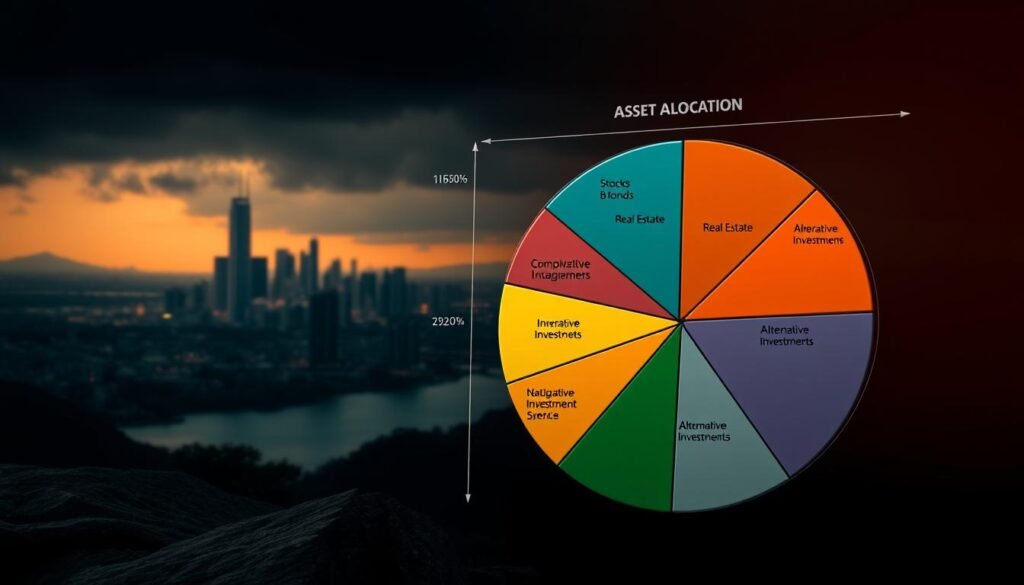
Think climate, not a five-day forecast: setting expectations
Choose by climate, not by day-to-day forecasts. Picking San Diego for mild weather versus Boston for seasonal swings is a clear example: you pick a place for the long run, not for tomorrow’s forecast.
How allocation explains most of a diversified investor’s experience
Research indicates roughly 88% of volatility and returns for diversified investors trace back to that initial mix. That means the mix sets the baseline, while individual investments fine-tune outcomes.
Matching allocation to comfort and financial goals
Higher stock weightings usually raise expected returns and volatility. More bonds and cash lower swings but also lower potential returns. Match the mix to your time horizon and goals so the portfolio works with your plan, not against it.
- Document your mix and why it fits your goal and time frame.
- Review periodically—markets can push your mix off target.
- Understand each class so value swings feel tolerable when markets move.
| Typical Mix | Primary Result | Investor Fit |
|---|---|---|
| High stocks / low bonds | Higher returns, higher volatility | Long time horizon, growth focus |
| Balanced stocks and bonds | Moderate returns, moderate volatility | Medium time frame, balanced goals |
| Low stocks / high bonds-cash | Lower returns, reduced volatility | Near-term needs, capital preservation |
Understanding asset classes and allocation styles
Knowing the roles each class plays makes it easier to match holdings to your time frame and goals.
Core asset classes include stocks, bonds, and cash. Stocks add growth potential by representing ownership in companies. Bonds provide income and can reduce swings. Cash and cash equivalents preserve capital and supply liquidity for short-term needs.
Beyond the core: real estate and alternatives
Advisors often add real estate and select alternatives to broaden diversification. These types can lower correlation with stocks and bonds, but they may be less liquid and carry unique risks.
Aggressive vs. conservative portfolios and what they imply
An aggressive mix tilts toward stocks for higher expected returns and larger drawdowns. A conservative mix raises bonds and cash to smooth returns and protect near-term capital.
- Example aggressive mix: 80% stocks, 15% bonds, 5% cash — higher long-term growth, higher volatility.
- Example conservative mix: 40% stocks, 45% bonds, 15% cash — lower swings, more income and liquidity.
Diversify within each class: use U.S. and international funds or individual securities across sectors and sizes; vary bond maturity, issuer, and credit; choose high-yield savings, T-bills, or money market funds for cash needs. Labeling holdings by class clarifies each holding’s role and helps keep the plan disciplined as markets shift.
How to build your asset allocation step by step
Begin with a clear timeline: map goals to specific years and the cash you’ll need. Near-term goals (under five years) favor cash or equivalents. Goals 15–20 years away can accept more stocks for growth.
Match mix to age and risk tolerance. Use age and how much loss you can tolerate to shape a stocks-bonds-cash split. Treat rules of thumb like the rule of 100 as a starting point, not a rule.

Segment by account type
Not every account needs the same mix. Hold more growth-oriented funds in retirement accounts with long time horizons. Keep taxable accounts more liquid if you expect to spend that money sooner.
Diversify within classes and rebalance
Spread stocks by geography, sector, and size. Blend bonds by maturity and issuer and consider a bond ladder. Markets will move your percentages—set a calendar or threshold rule to rebalance and restore the target mix.
Shortcuts that save time
- Work with a financial advisor for tailored planning and monitoring.
- Use target-date funds or a robo-advisor to automate diversification and rebalancing.
- Document your risk tolerance, monitor annually, and keep costs low so your money works efficiently over time.
Key risks, limits, and what diversification can—and can’t—do
“Every portfolio faces limits—knowing them keeps an investor from confusing hope with safety.”
Understand the main risks before you act. Equity securities can fall on company news, industry shifts, or broader market moves. Dividend cuts are possible, and past returns offer no guarantee of future results.

Volatility and market risk in stocks
Stocks bring volatility. Market-wide selloffs and company-specific events can change value quickly. Plan for swings and set drawdown guardrails so you avoid reactionary choices.
Bond-specific risks
Bonds face interest rate risk: prices fall when rates rise, and longer maturity increases sensitivity. Credit issues can lead to default, call features may end higher coupons, and reinvestment risk can reduce income.
Limits of diversification and rebalancing
Diversification helps manage factors that drive returns, but it cannot prevent loss in falling markets. Rebalancing restores target mixes, yet it may trigger taxes in taxable accounts.
Practical steps and when to seek help
- Weigh tax impacts before trading in taxable accounts.
- Consider liquidity and protections—some alternatives lack standard safeguards.
- Use a financial advisor for complex bond ladders, maturity profiles, or multi-account planning.
Review your plan regularly so the mix of assets and risks fits your time frame and goals as markets and life change.
Conclusion
Well-chosen splits between stocks, bonds, and cash help keep plans on track through market swings. Define goals, map your time horizon, and set a mix that matches your tolerance and age. Document target percentages and simple trigger points for rebalancing.
Use funds, target-date options, or automated tools to simplify implementation and control costs. Diversify within each class and consider selective real estate or alternatives when they fit your retirement or savings goals.
Remember: smart allocation is the foundation of a disciplined portfolio strategy. Revisit the plan after major life changes and consult an advisor for complex retirement or multi-account planning so your money stays aligned with the outcomes you want.
FAQ
What is the most important step to reach my financial goals with effective asset allocation?
Start by defining clear financial goals and a realistic time horizon. Identify near-term needs (emergency fund, short-term purchases) and long-term goals (retirement, college). Then match your mix of stocks, bonds, and cash to those goals and your comfort with market swings. This approach helps balance potential returns with risk and keeps choices aligned with real objectives.
How does allocation drive a portfolio’s risk and returns?
Your mix of stocks, bonds, and cash explains much of portfolio performance over time. Stocks provide growth but bring volatility; bonds tend to smooth returns and offer income; cash preserves capital but yields less. The balance among these groups determines overall volatility and expected returns, so strategic placement matters more than guessing short-term market moves.
What does “think climate, not a five‑day forecast” mean for investors?
It means focus on long-term trends and structural plans instead of reacting to daily market noise. Commit to a plan based on goals and horizon, and avoid frequent changes driven by short-term headlines. That discipline usually produces better outcomes and reduces emotional trading that can hurt returns.
How should I match my mix to my age and risk tolerance?
Younger investors often can take more risk with a higher share of stocks for growth, while those closer to retirement typically shift toward bonds and cash for capital preservation. Use tools like risk-tolerance questionnaires and simple rules (for example, adjusting equity exposure with age) as starting points, then refine with personal factors like income stability and other assets.
What are the core asset classes I should understand?
The main categories are equities (stocks), fixed income (bonds), and cash equivalents. Equities offer growth potential; fixed income provides income and lowers volatility; cash protects principal and provides liquidity. A well-constructed mix across these types helps manage risk and pursue returns consistent with your goals.
Should I consider real estate and alternatives in my plan?
Yes—real estate and alternative investments (private equity, commodities, hedge funds) can add diversification and potentially improve risk-adjusted returns. They also bring unique risks, liquidity constraints, and often higher fees. Use them selectively and typically as a smaller portion of a diversified portfolio.
How do aggressive and conservative portfolio styles differ?
Aggressive portfolios emphasize growth with a higher proportion of stocks and potentially alternatives, accepting greater short-term volatility. Conservative portfolios prioritize capital preservation, favoring bonds and cash for steady income and lower fluctuation. The right style depends on your goals, horizon, and tolerance for losses.
What are the steps to build a practical mix for my accounts?
Define goals and timeline, assess risk tolerance, decide target proportions of stocks, bonds, and cash, and then assign investments across tax-advantaged accounts (401(k), IRA) and taxable accounts to maximize tax efficiency. Diversify within each category using mutual funds or ETFs, then set a rebalancing plan to maintain targets.
How often should I rebalance, and why does it matter?
Rebalance periodically—commonly annually or when allocations drift by a set percentage—to keep your risk profile on target. Rebalancing enforces discipline: you sell portions that have grown too large and buy those that lag, which can improve long-term returns and control risk. Watch for tax costs in taxable accounts when rebalancing.
What shortcuts can make building a diversified plan easier?
Consider target-date funds, low-cost index ETFs, robo-advisors, or working with a financial advisor. Simple heuristics like the rule of 100 or using broad-based funds can provide instant diversification and reduce decision fatigue while still aligning with long-term goals.
What key risks should I be aware of with stocks and bonds?
Stocks carry market and volatility risk—values can fall sharply. Bonds face interest-rate risk (prices fall when rates rise), credit risk (issuer defaults), call risk (early redemption), and reinvestment risk. Understanding each instrument’s risk helps you set realistic expectations and choose the right exposure for your plan.
Can diversification and rebalancing eliminate losses?
No. Diversification reduces concentration risk and can lower volatility, but it does not guarantee a profit or prevent loss. Market-wide downturns can hurt many asset classes simultaneously. Rebalancing maintains your intended risk profile but won’t shield you from systemic shocks.
What tax implications should I consider when adjusting my mix?
Selling investments in taxable accounts may trigger capital gains taxes. Placing tax-inefficient assets (like taxable bonds) in tax-deferred accounts and using tax-loss harvesting where appropriate can improve after-tax results. Always factor taxes into rebalancing and allocation changes.
When should I consult a qualified financial advisor?
Seek a fee-only fiduciary advisor if you face complex situations: estate planning needs, significant wealth, business ownership, or uncertain retirement income. An advisor can help tailor diversification, tax strategies, and withdrawal plans to your circumstances and keep decisions aligned with long-term goals.